Volkswagen and Cariad's AI Overhaul: What Is Actually Shipping in Q2 2026
Cariad has been Volkswagen's great software bet since 2022, absorbing billions and burning goodwill in roughly equal measure. With the ID.4 software refresh hitting production lines this quarter, we examine what machine-learning features have genuinely shipped, what got quietly dropped, and whether VW has finally turned the corner on AI-in-car delivery.
Volkswagen has finally shipped meaningful, production-grade machine-learning features to a volume car, and the April 2026 ID.4 software refresh is the clearest evidence yet that Cariad has moved from permanent crisis mode into something resembling a functioning software organisation. That is a low bar, given the history, but it is a real one.
For anyone who has tracked Cariad since its formal relaunch in 2022, under the stewardship of then-CEO Peter Bosch and latterly Carsten Helbing, the journey has been expensive and frequently humiliating. Cost overruns on the VW.OS software platform pushed the cumulative bill past four billion euros before the end of 2024, a figure confirmed in Volkswagen Group's annual report. Entire model launches were delayed. The ID.3 facelift arrived with features missing. Interior displays froze. Critics inside the German automotive press, most pointedly Manager Magazin, described Cariad as a case study in how legacy manufacturers struggle to build software culture from scratch inside a hardware organisation.
Advertisement
None of that history has vanished. But the Q2 2026 ID.4 refresh does represent something new: a set of ML-backed capabilities that passed internal validation, cleared regulatory review under the EU's type-approval regime, and are rolling to customers on time.
"Cariad has moved from permanent crisis mode into something resembling a functioning software organisation. That is a low bar, given the history, but it is a real one."
AI in Europe editorial analysis
What Is Actually In the Refresh
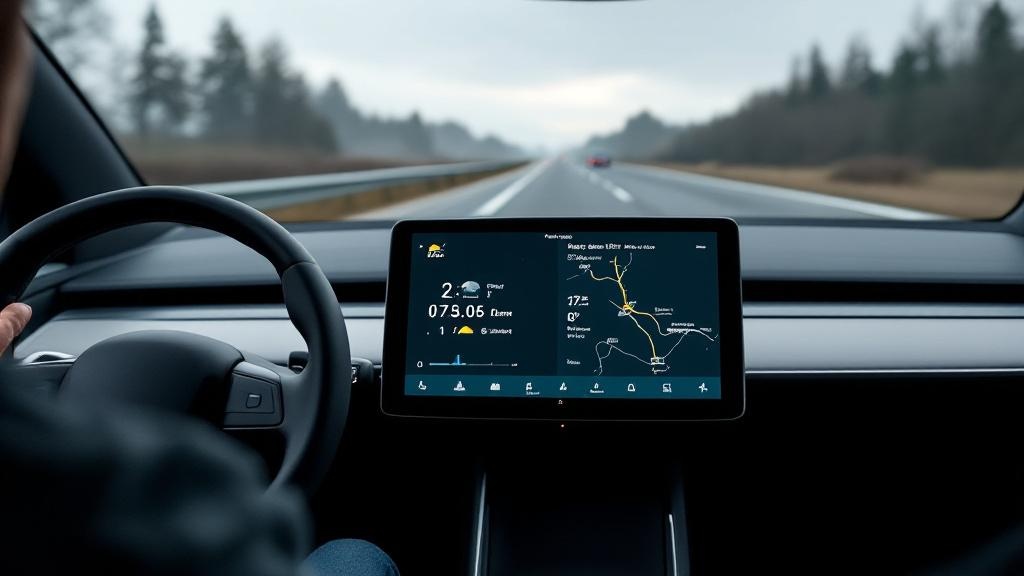
The headline feature is what Cariad calls Predictive Range Management, a neural-network-based system that fuses real-time traffic data, topographic maps, historical driving patterns stored locally on the vehicle, and weather telemetry to produce a range estimate that updates every 90 seconds. In testing published by Cariad's engineering blog in February 2026, the system reduced range-estimate error by approximately 23 per cent compared with the previous physics-only model on mixed urban and motorway routes in Germany and the Netherlands. That claim has not yet been independently validated by a third-party test house, and Volkswagen has not submitted it to TUV Rheinland or any equivalent body for public certification, which is a gap worth watching.
The second shipped feature is an updated voice assistant built on a fine-tuned large language model running partially on-device, partially via Volkswagen's dedicated cloud infrastructure hosted at Deutsche Telekom's European data centres. The assistant handles natural-language routing changes, climate control adjustments, and a limited set of infotainment queries without requiring a phone connection. Crucially, the LLM inference for safety-relevant commands, route changes and emergency calls, runs entirely on the vehicle's Qualcomm Snapdragon Ride processor stack, not in the cloud. This is an important architectural decision: it preserves function when connectivity drops and helps Volkswagen argue compliance with the EU AI Act's requirements around high-risk AI in safety-critical contexts.
Third, Cariad has shipped a refined driver-monitoring system using the cabin-facing camera array. The system uses a convolutional neural network to detect drowsiness and sustained distraction, triggering audio and haptic alerts after a defined threshold. This is not a new category for the industry, but the integration with Volkswagen's MEB platform is cleaner than the version that appeared in the Audi Q6 e-tron last year, where latency between detection and alert was criticised in early reviews.
What Got Cut
The cuts are at least as instructive as the deliveries. Cariad had publicly signalled, in a 2024 product roadmap presentation covered by Automotive News Europe, that the ID.4 refresh would include an automated lane-change feature using a new sensor-fusion stack co-developed with Mobileye. That feature is absent from the shipping build. Volkswagen's spokesperson confirmed to several outlets in March 2026 that the lane-change automation has been pushed to a planned over-the-air update in Q4 2026 at the earliest, subject to regulatory sign-off under UNECE Regulation 157 on Automated Lane Keeping Systems. The honest reading is that the sensor-fusion integration between Cariad's software layer and Mobileye's EyeQ6 hardware ran into validation failures that could not be resolved before the production window closed.
Also absent is the personalised charging-schedule optimisation feature, which was supposed to learn a driver's weekly calendar from a connected smartphone and pre-condition the battery accordingly. Cariad's engineering team deprioritised this after discovering that data-minimisation requirements under the German implementation of GDPR made the necessary calendar-access permissions difficult to justify to regulators at the Bundesnetzagentur. The feature may return in a simplified form, but it has effectively been killed in its original design.
A third casualty is the over-the-air update architecture itself, at least in its most ambitious form. Volkswagen had wanted full domain-controller updates, including for the powertrain management unit, to be deliverable remotely without a dealership visit. That capability is present for infotainment and driver-assistance domains but not yet for powertrain, because type-approval rules under EU regulations still require physical sign-off for certain powertrain parameter changes. This is a regulatory constraint, not purely a Cariad engineering failure, but it limits the commercial story Volkswagen can tell about fleet-wide AI improvement post-sale.
The Cariad Restructuring Context
Understanding what shipped requires understanding what Cariad looks like in April 2026. The organisation has shed roughly 1,300 positions since mid-2024, a reduction that Volkswagen Group's supervisory board endorsed as part of a broader cost-efficiency programme confirmed in the Q1 2026 interim financial report. Helbing, who took the CEO role at Cariad in late 2024, has pushed a narrower product scope: fewer bespoke features, more integration of third-party ML models via API, and a deliberate move away from the original ambition of building every software component in-house.
That strategic retreat has drawn criticism from those who argued Cariad's original in-house logic was correct, simply badly executed. Professor Andreas Riener at Technische Hochschule Ingolstadt, who has published on human-machine interfaces in automated vehicles, noted in a January 2026 conference presentation that relying on third-party LLM APIs for in-car voice interaction creates long-term dependency risks and raises questions about data sovereignty for European customers. His concern is legitimate: if the voice assistant's cloud component runs on infrastructure that is not under Volkswagen's operational control, the company's ability to guarantee service continuity and data residency is constrained.
The Broader ML-in-Cars Picture for VW Group
The ID.4 refresh does not exist in isolation. Porsche's Taycan received an updated neural-network-based torque-vectoring calibration system in February 2026, delivered via OTA, and Audi has been running a limited pilot of predictive suspension adjustment on the Q8 e-tron in Germany and Austria since January. Both of these suggest that Cariad's platform investment is beginning to generate returns across the group, not just at the Volkswagen brand.
The financial picture, however, remains uncomfortable. Volkswagen Group's Q1 2026 report showed that the Software and Digital business segment, which encompasses Cariad, posted an operating loss. The group has not disclosed a specific Cariad profit-and-loss breakdown, but analysts at Bernstein Research estimated in April 2026 that Cariad requires a further 18 to 24 months to reach cash-flow break-even, assuming current headcount and a stable product scope. That timeline is tight given the competitive pressure from Tesla's over-the-air update velocity and from Chinese EV manufacturers entering the European market with software stacks that, whatever their provenance, appear to update faster than anything in Wolfsburg's pipeline.
Regulatory Tailwinds and Headwinds
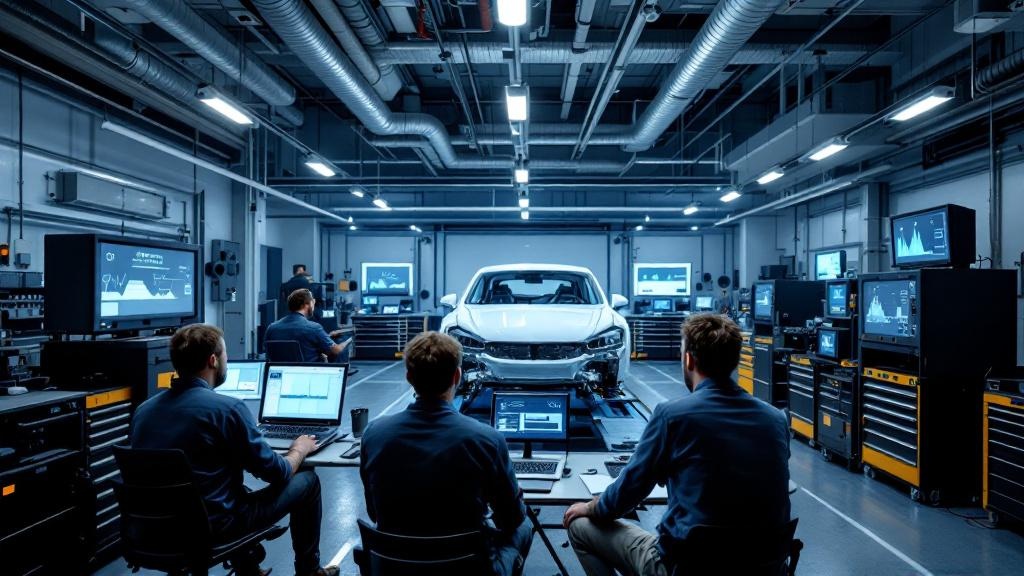
Europe's regulatory environment is genuinely double-edged for Cariad. The EU AI Act's tiered risk framework creates compliance overhead that slows feature deployment, particularly for anything touching driver monitoring or autonomous functions, which fall into high-risk categories requiring conformity assessments. Cariad's legal team has been working with TUV SUD on conformity documentation, a process that began in earnest in mid-2025. The volume of documentation required for even a modest ML feature update is substantial, and smaller software teams at startups can absorb that overhead proportionally more easily than a large corporate engineering group.
On the other hand, GDPR and the AI Act's data-governance requirements create genuine moats for European OEMs selling to European customers. A Chinese EV manufacturer or an American platform company seeking to process European driver data at scale faces the same regulatory friction. Volkswagen, operating under German law and with data infrastructure anchored in the EU, can offer customers something that genuinely differentiates: local processing, auditable models, and accountability chains that European regulators recognise. Whether Volkswagen's marketing organisation has the wit to articulate that advantage is a separate question.
The financial and operational scale of Volkswagen's AI software effort is easier to understand when the headline figures are laid side by side. From cumulative Cariad investment to driver-monitoring latency benchmarks, the numbers reveal both how much has been spent and how narrow the delivered feature set remains relative to that expenditure.
THE AI IN EUROPE VIEW
The ID.4 refresh is a genuine, if modest, inflection point for Cariad, and it deserves to be acknowledged as such without being oversold. Volkswagen has shipped production ML features, on time, in a volume car. That was not true in 2023 and it is true now. Credit where it is due.
But the cuts matter as much as the deliveries. The lane-change automation delay, the killed charging-schedule feature, the incomplete OTA architecture for powertrain, these are not minor edge cases. They represent the gap between what Volkswagen's senior leadership promised investors and customers and what the engineering organisation was actually capable of delivering in the available window. That gap has narrowed; it has not closed.
The deeper structural question is whether Cariad, now leaner and more reliant on third-party APIs, has genuinely changed its engineering culture or simply reduced its ambitions to match its capabilities. Reducing ambitions is not the same as solving the underlying problem. European automotive AI is not going to be built on managed retreats. It requires exactly the kind of full-stack, in-house machine-learning competence that Cariad originally promised and has repeatedly failed to deliver at scale. Volkswagen has bought itself time with this refresh. It has not yet earned the right to declare victory.
Updates
published_at reshuffled 2026-04-29 to spread distribution per editorial directive
Byline migrated from "Sebastian Müller" (sebastian-muller) to Intelligence Desk per editorial integrity policy.
AI Terms in This Article6 terms
LLM
A large language model, meaning software trained on massive text data to generate human-like text.
inference
When an AI model processes input and produces output. The actual 'thinking' step.
neural network
Software loosely inspired by how brain cells connect, used to find patterns in data.
API
Application Programming Interface, a way for software to talk to other software.
at scale
Applied broadly, to a large number of users or use cases.
data sovereignty
The principle that data is subject to the laws of the country where it's collected.
Advertisement
Comments
Sign in to join the conversation. Be civil, be specific, link your sources.




Comments
Sign in to join the conversation. Be civil, be specific, link your sources.