"Neither Stellantis nor Renault believes it can build a competitive Level 3 or Level 4 autonomy stack alone, at least not within the cost envelope that European consumers can realistically absorb."
AI in Europe analysisThe Commission's scrutiny is not, by itself, a red flag. Regulators routinely examine cooperation agreements of this scale before clearing them, and both companies have indicated through public statements that they are engaging constructively with Brussels. What matters is the underlying logic driving the deal: neither Stellantis nor Renault believes it can build a competitive Level 3 or Level 4 autonomy stack alone, at least not within the cost envelope that European consumers can realistically absorb.
Luca de Meo, chief executive of Renault Group, has been consistent and public about his belief that European carmakers must pool resources on shared software platforms to avoid permanent subordination to American and Chinese technology suppliers. His Ampere software unit, carved out of Renault and partly floated on Euronext Paris, is the vehicle through which Renault intends to contribute its software engineering capacity. Ampere's engineers have been working on a modular AI stack that can, in principle, be licensed or co-developed with partners, and Stellantis's own software organisation is understood to be the most significant prospective collaborator to date.
What the data pool actually contains
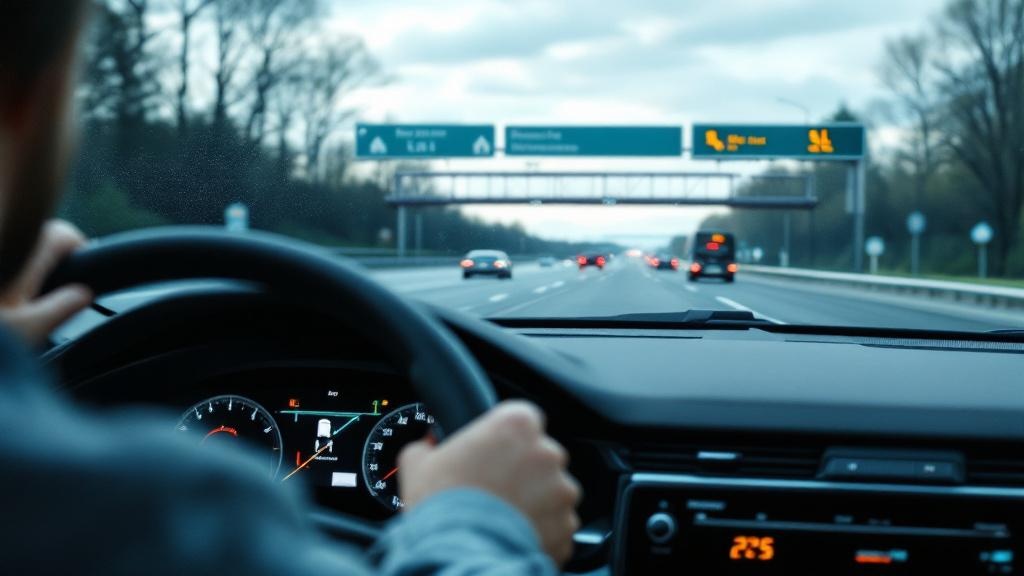
The technical substance of the arrangement centres on anonymised telematics and sensor logs rather than real-time vehicle tracking. Both groups operate fleets running advanced driver-assistance systems across European road networks, accumulating edge-case data, including unusual weather conditions, complex urban junctions, and motorway merge scenarios, that is genuinely difficult to synthesise artificially. Pooling this data accelerates the training of perception models without either party surrendering proprietary vehicle design or pricing information.
Stellantis has been investing heavily in its own software-defined vehicle programme following the departure of its previous chief software officer and a widely reported reset of its technology strategy in late 2025. The group's 2026 press communications have emphasised a renewed focus on in-house AI capability, with Turin and Paris both cited as primary engineering hubs. That geographic concentration is not accidental: Italian and French government stakeholders have made clear they expect meaningful AI engineering work to remain on European soil rather than being offshored to North American or East Asian contractors.
The antitrust question
The Commission's preliminary review is being handled under the standard framework for horizontal cooperation agreements. Legal observers in Brussels note that data-sharing arrangements between competitors are not inherently anticompetitive, provided the data cannot be used to coordinate pricing, output, or market allocation. Anonymised sensor logs used exclusively for AI model training sit in a relatively comfortable position under existing guidance, but the sheer scale of the Stellantis-Renault pool, potentially covering tens of millions of vehicle-kilometres per month, means the Commission will want granular assurances about governance and access controls.
The Commission has previously cleared comparable arrangements in other technology sectors, and the political context in 2026 strongly favours approving partnerships that strengthen European technology self-sufficiency. The EU AI Act, now in its operational phase, explicitly encourages cooperative approaches to AI development in high-risk application categories, of which autonomous driving is unambiguously one. That regulatory tailwind gives both carmakers reasonable grounds for confidence that clearance will follow, albeit with conditions attached.
The scale of what Stellantis and Renault are attempting becomes clearer when you look at the raw figures behind European autonomous vehicle investment, the data volumes involved, and the competitive gap that this partnership is designed to close.
What this means for autonomous Europe
The broader significance of this partnership extends beyond the two companies involved. For years, European carmakers have been criticised for outsourcing their AI ambitions to a small number of Tier 1 suppliers and American software firms, surrendering strategic control over the algorithms that will increasingly define vehicle performance and safety. A credible Franco-Italian data-sharing arrangement, backed by two groups with combined annual sales well above three million vehicles in Europe alone, creates a training-data asset of genuine scale.
It also signals a shift in how European automotive executives are thinking about competition. De Meo and Tavares, despite leading rival commercial organisations, appear to share a diagnosis: the enemy is not each other but the gap between European AI capability and that of the leading players in California and Shenzhen. Whether that shared diagnosis translates into durable cooperation, rather than a tactical arrangement that unravels when commercial pressures mount, remains the central question.
Les Echos, which has followed both groups closely throughout their respective transformations, has noted the irony that two companies which have historically been fierce domestic rivals in France and Italy are now finding more common cause on software than on any previous dimension of their businesses. The newspaper's automotive correspondents have pointed out that the arrangement has the quiet support of the French Ministry for Industry, which has been urging national champions to build European AI infrastructure rather than license it from abroad.
For now, the partnership is in early structural form. Joint governance bodies are reportedly being established, data-transfer protocols are being standardised, and legal teams on both sides are working through the Commission's information requests. The road to a fully integrated European AI driving stack is long and the obstacles are real. But the direction of travel, for once, is unmistakable.
THE AI IN EUROPE VIEWThis partnership deserves more attention than it is currently receiving outside specialist automotive circles. The Stellantis-Renault data-pooling arrangement is not a press-release friendship; it is a structural response to a genuine strategic problem that European carmakers have been avoiding for the better part of a decade. The problem is simple: training competitive autonomous driving models requires data at a scale that no single European manufacturer currently possesses, and buying that capability from American or Chinese vendors means surrendering control over the systems that will define road safety and vehicle performance for the next thirty years.
The European Commission's antitrust review is the right process to run, but regulators should move quickly and with a clear presumption in favour of approval. The AI Act framework already anticipates cooperative AI development in high-risk sectors; the Commission's competition directorate needs to align with that logic rather than treating this as a routine horizontal agreement from a pre-AI era rulebook. Conditions around governance and data access are entirely appropriate. Drawn-out uncertainty is not. Europe's autonomous vehicle window is narrowing, and administrative caution is not a neutral act.




Comments
Sign in to join the conversation. Be civil, be specific, link your sources.