Europe's AI Energy Crisis Is Fuelling a Small Modular Reactor Gold Rush
Artificial intelligence's insatiable demand for electricity is triggering a nuclear renaissance across Europe, with billions pouring into small modular reactor startups. From Rolls-Royce to EDF, the continent's industrial giants and a new wave of deep-tech ventures are betting that factory-built reactors can solve the data centre power crunch before the grid buckles.
Nuclear power is back, and this time it is not climate anxiety or energy security rhetoric doing the heavy lifting; it is the raw, relentless electricity demand of artificial intelligence. Europe's data centre boom is straining grids from Frankfurt to Dublin, and the continent's energy planners are increasingly concluding that small modular reactors (SMRs) represent the only credible path to 24/7 carbon-free baseload power at the scale AI infrastructure requires.
[[KEY-TAKEAWAYS:Venture funding in nuclear startups has surged from around 500 million dollars in 2020 to over 4 billion dollars in 2025.|AI data centres demand constant baseload power that renewables alone cannot reliably supply.|Rolls-Royce SMR and EDF are among the European industrial leaders advancing factory-built reactor programmes.|Regulatory approval timelines remain the single biggest constraint on SMR deployment across the EU and UK.|The UK Government's Great British Nuclear programme and EU Taxonomy inclusion of nuclear are reshaping the investment case.]]
Advertisement
The numbers are stark. OpenAI alone projects it will need 250 gigawatts of generation capacity by 2033, more than Brazil consumes in total. European hyperscale operators are not far behind in their ambitions. Traditional generation is struggling: natural gas capacity is constrained and politically contentious, renewables remain intermittent, and coal is finished as a political option. Nuclear, once written off after Fukushima, is the answer an increasing number of European engineers, investors, and ministers are reaching for.
European Capital Flows Into the Atom
Global venture funding for nuclear startups has exploded from roughly 500 million dollars in 2020 to over 4 billion dollars in 2025. Europe is not sitting on the sidelines. Rolls-Royce SMR, the UK-headquartered consortium, secured backing from BNF Resources and the British Government and is targeting deployment of its 470 MW factory-assembled units from the mid-2030s. EDF, the French state-backed giant, is advancing its Nuward SMR design, targeting 340 MW per unit and pitching it directly at industrial and data centre customers who need reliable off-grid or near-grid supply.
Smaller ventures are moving faster. Copenhagen Atomics, the Danish startup founded in 2014, is developing a molten salt reactor it claims can be assembled in a standard shipping container format, targeting costs far below conventional nuclear. UK-based Newcleo is advancing lead-cooled fast reactor technology with backing from European family offices and industrial groups. These are not theoretical propositions; they are companies with working prototypes, regulatory pre-applications filed, and commercial pipelines being actively built.
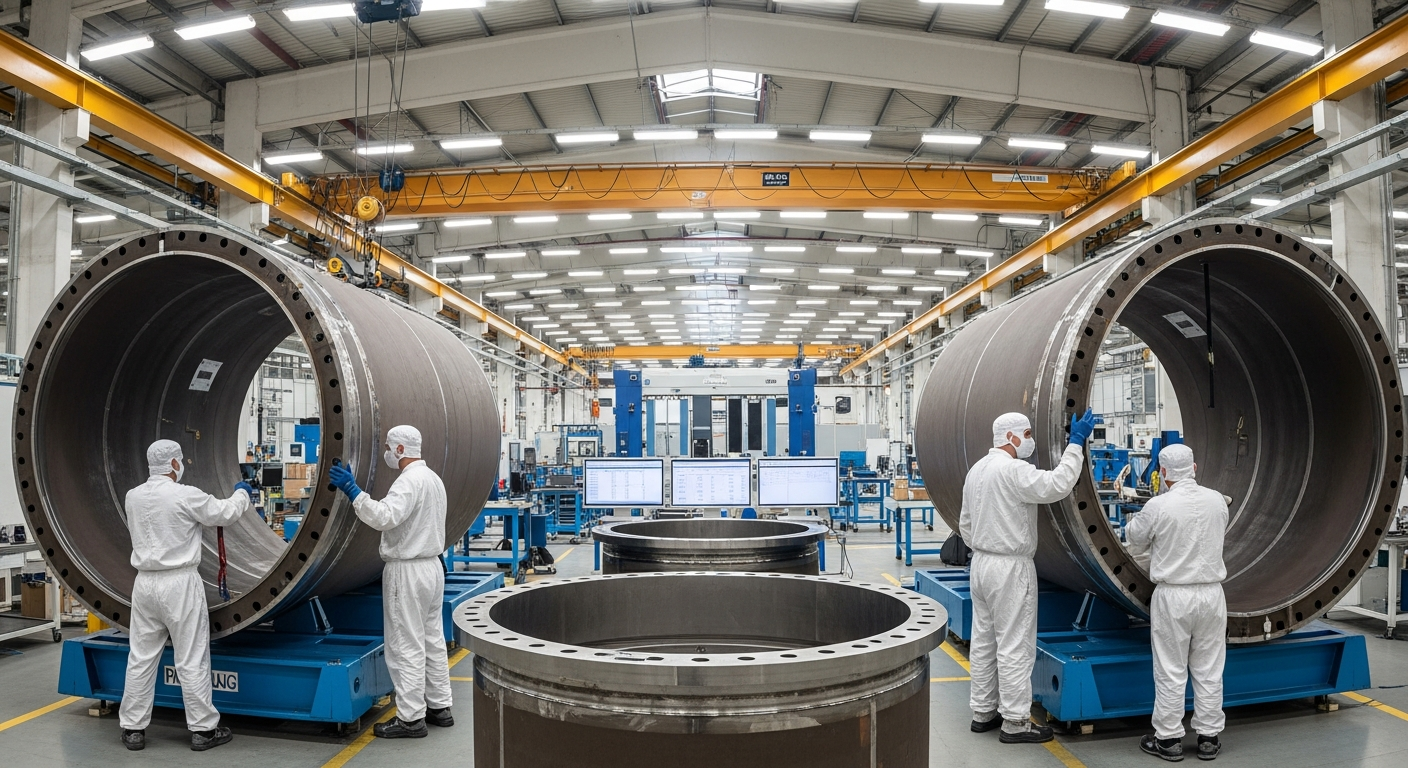
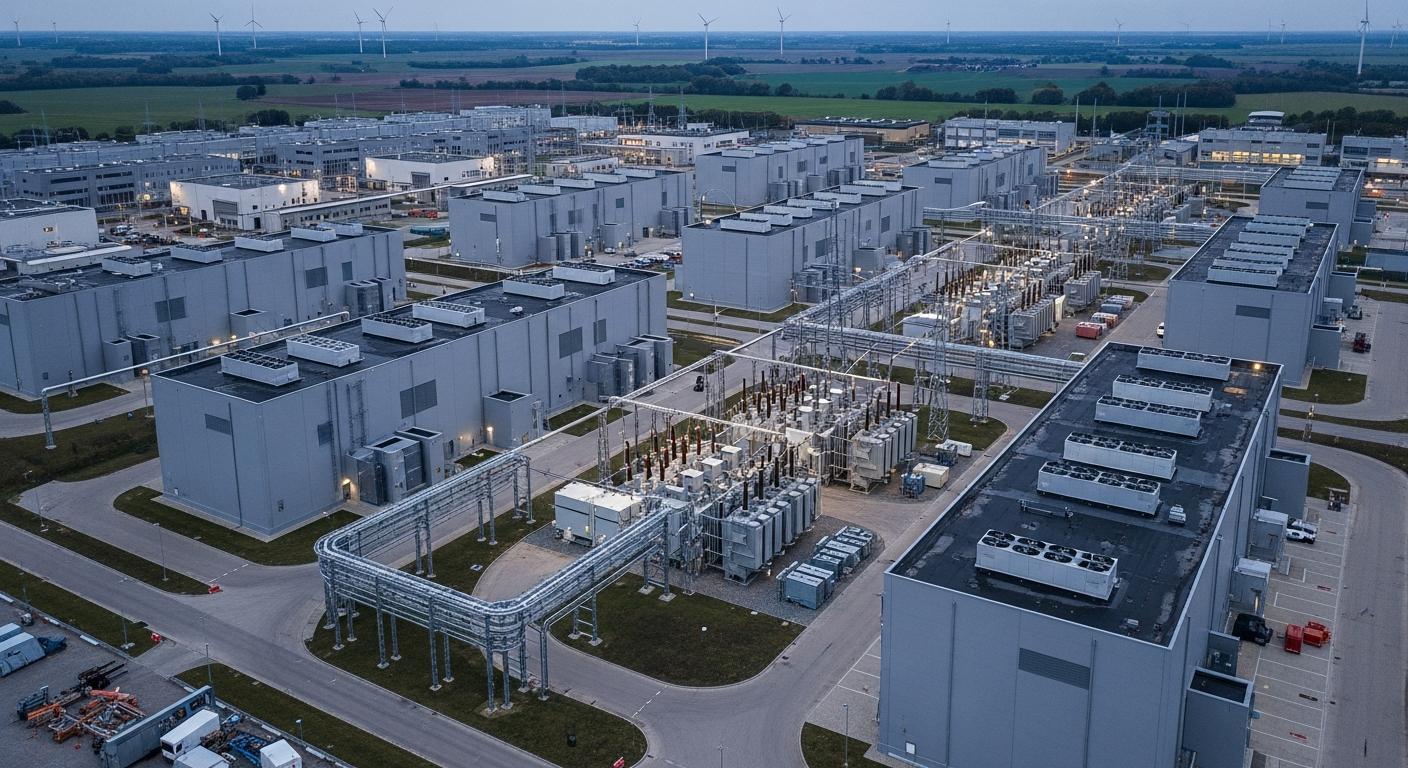
The pitch common to all of them is compelling: factory-manufactured reactors, smaller and faster to build than conventional gigawatt-scale plants, delivering clean power in a footprint smaller than a football pitch, around the clock, regardless of weather. For hyperscale data centre operators who cannot afford a single hour of unplanned downtime, that proposition is increasingly difficult to dismiss.
Political and Regulatory Winds Are Shifting
The regulatory environment in both the UK and EU has shifted materially in nuclear's favour over the past three years. The European Commission's inclusion of nuclear in the EU Taxonomy for Sustainable Finance in 2022 was a watershed moment, unlocking institutional capital that had previously been barred from the sector. The UK Government's Great British Nuclear programme, launched in 2023, established a technology selection process for SMRs and committed state support for the winning designs.
Dr. Anna Valkering, head of nuclear policy at the European Commission's Directorate-General for Energy, stated in a 2024 briefing that the Commission views SMRs as a critical component of Europe's energy security architecture, particularly in the context of AI-driven demand growth. Meanwhile, Lord Callanan, the UK's former Energy Minister, has been consistent in arguing that nuclear must form the backbone of the UK's long-term low-carbon generation mix, not a marginal contribution to it.
This regulatory tailwind is translating into industrial scale ambition. Rolls-Royce SMR has identified multiple potential sites across the UK, including former conventional nuclear locations such as Wylfa in Wales and Sellafield in Cumbria, both of which benefit from existing grid connections, planning precedent, and local workforces with nuclear skills. EDF is in advanced conversations with European industrial clusters about dedicated SMR-powered supply arrangements.
The Engineering and Regulatory Realities
Enthusiasm, however justified, must be tempered by engineering and regulatory reality. The challenges facing SMR deployment across Europe are substantial and should not be minimised by anyone serious about the timelines involved.
Regulatory approval processes through the UK's Generic Design Assessment and equivalent EU national processes typically take seven to ten years for entirely new reactor designs.
Public acceptance remains fragile in several member states, with Germany's April 2023 nuclear exit still casting a long shadow over pan-European sentiment.
Supply chain capacity for specialist nuclear-grade components, from pressure vessels to control systems, is severely constrained after decades of underinvestment.
Skilled workforce pipelines in nuclear engineering and operations have not yet recovered from the post-Fukushima contraction in the sector.
Competition from rapidly improving battery storage and offshore wind costs continues to challenge nuclear's economic case for some applications.
Rolls-Royce SMR's own publicly stated timeline puts first power no earlier than 2033, and that assumes the Generic Design Assessment process runs on schedule, which it historically rarely does. Newcleo and Copenhagen Atomics are working to faster internal timelines but face the same regulatory pipeline constraints.
The fundamental tension in European nuclear development is between the urgency of AI energy demand, which is arriving now, and the structural slowness of nuclear licensing, which operates on decade-scale timescales. Bridging that gap is the central policy challenge facing both the UK Government and the European Commission.
What Makes SMRs Different From Conventional Nuclear
For readers unfamiliar with the technical distinctions, the SMR proposition rests on several concrete differentiators from the gigawatt-scale plants that defined nuclear power in the 20th century.
SMRs are typically rated below 300 MW, making them suitable for siting closer to demand centres including industrial parks and data centre campuses.
Factory assembly is central to the cost model: standardised modules manufactured under controlled conditions, then transported and installed on site, should reduce the cost overruns that have plagued bespoke large-scale projects such as Hinkley Point C.
Modern designs incorporate passive safety systems that shut down automatically without human intervention, addressing one of the core public concerns that followed Three Mile Island and Fukushima.
Modular scalability allows operators to add capacity incrementally, matching supply growth to demand growth in a way conventional plants cannot.
The comparison to automotive manufacturing is one that several founders use deliberately. The goal is to make nuclear feel less like a bespoke infrastructure megaproject and more like a manufactured product with predictable costs, quality controls, and delivery schedules. Whether the analogy holds in practice, given the unique regulatory and materials requirements of nuclear, remains the central question the industry must answer over the next decade.
AI and Nuclear: A European Strategic Bet
What is driving the convergence of AI investment and nuclear energy is not simply the electricity bill. It is the strategic recognition that whoever controls reliable, carbon-free, large-scale baseload generation will have a structural advantage in the global AI race. European hyperscalers and sovereign AI initiatives cannot afford to outsource that advantage to intermittent renewables backed by batteries that do not yet exist at the required scale.
ETH Zurich's Energy Science Centre has published modelling suggesting that if European data centre capacity grows at projected rates through 2035, SMRs at dedicated industrial energy parks represent one of only three viable pathways to meeting demand without reintroducing significant fossil fuel generation. The other two, massively accelerated offshore wind buildout and continent-scale grid interconnection, face their own substantial delivery risks.
The atomic age 2.0, as some in the sector are calling it, is not arriving on a military footing as it did in the 1950s. It is arriving in response to the electricity hunger of large language models, GPU clusters, and the data infrastructure underpinning the European digital economy. That is, in its way, a more durable foundation than the geopolitical pressures that drove the first nuclear age. The question is whether Europe's industrial and regulatory machinery can move fast enough to make it count.
Updates
published_at reshuffled 2026-04-29 to spread distribution per editorial directive
AI Terms in This Article3 terms
GPU
Graphics Processing Unit, the powerful chips that AI models run on.
AI-driven
Primarily guided or operated by artificial intelligence.
sovereign AI
National initiatives to develop domestic AI capabilities independent of foreign providers.
Advertisement
Comments
Sign in to join the conversation. Be civil, be specific, link your sources.




Comments
Sign in to join the conversation. Be civil, be specific, link your sources.