

Cisco's decision to anchor itself inside HUMAIN, Saudi Arabia's Public Investment Fund-backed AI enterprise, is not a Gulf story. It is a global infrastructure story, and European CIOs in energy, finance, and logistics should be reading it as a competitive warning. The partnership targets open, scalable, and cost-efficient AI systems built on sovereign soil. Europe has been debating exactly the same architecture for three years. Saudi Arabia is now building it.
What the HUMAIN Alliance Actually Does
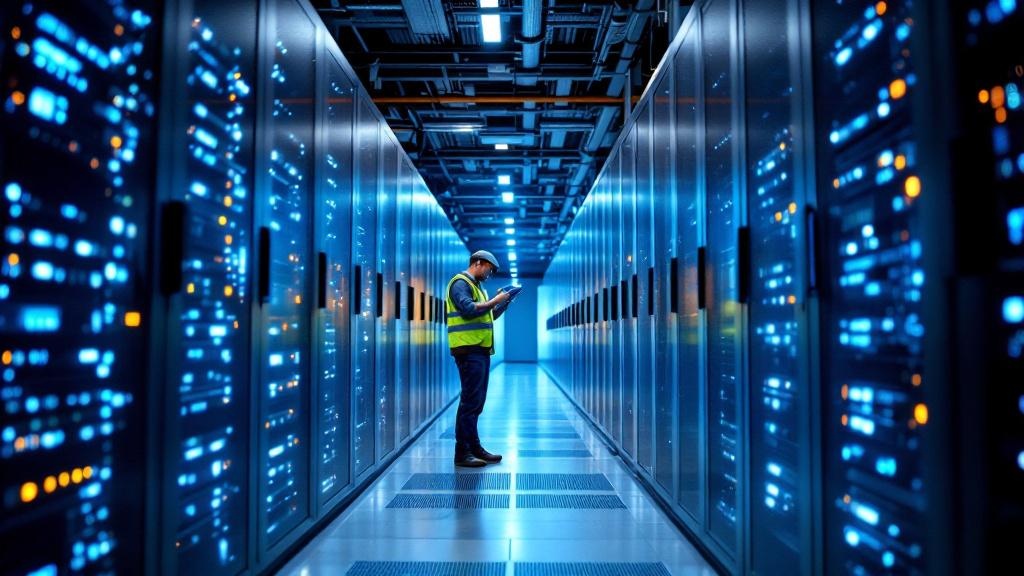
HUMAIN launched as Saudi Arabia's full-stack AI vehicle, covering everything from chips to applications. Cisco's entry adds enterprise networking, cybersecurity architecture, and the resilient data-centre design that turns a national AI strategy into something firms can actually plug into. The collaboration focuses on AI factories, secure data centres, and compliance with local data-residency rules. It is, in structural terms, almost identical to what several EU member states have been trying to assemble under the banner of the European Cloud Federation and GAIA-X, except it is being executed with sovereign wealth capital rather than committee consensus.
The deal also follows HUMAIN's 2025 memorandum with Qualcomm for hybrid AI across cloud and edge devices. Cisco adds the networking layer. Together, the stack covers inference at the edge, training in the data centre, and interconnection between both. That is a blueprint European energy operators running distributed grids, or logistics firms managing pan-continental fleets, would recognise immediately as useful.
Europe's Sovereign Compute Problem Is Identical
The pressure driving Saudi Arabia's investment is not unique to the region. European regulators face the same three converging forces. First, cloud demand across the EU is accelerating sharply; Synergy Research Group has tracked compound annual growth rates above 30% in European data-centre capacity. Second, BCG and others estimate AI could add hundreds of billions to European GDP by 2030 if deployment keeps pace with ambition. Third, and most critically for the energy sector, the EU AI Act and GDPR together create a data-residency and compliance environment that makes reliance on US hyperscalers structurally awkward for regulated industries.
Carme Artigas, the Spanish Secretary of State for Digitalisation and AI who co-chaired the UN's AI advisory body, has argued repeatedly that Europe must build sovereign AI capacity rather than outsource it. She is right, and the HUMAIN-Cisco deal illustrates exactly what that capacity looks like in practice: a vertically integrated stack, government-backed, enterprise-ready, and designed from day one around local compliance.
Equally pointed is the position of Mistral AI, the Paris-based large language model company that has positioned itself as Europe's answer to OpenAI. Mistral's chief executive Arthur Mensch has stated publicly that European enterprises need sovereign model infrastructure, not just access to American platforms. A Cisco-style partnership anchoring Mistral's models inside EU-regulated data centres would be the logical European equivalent of the HUMAIN deal. That conversation is happening in European capitals. It is not yet concluded.
Energy Sector Implications Are Concrete
The sectors named explicitly in the HUMAIN partnership are energy, finance, and logistics. For European readers, that list is pointed. Energy is the sector under the most acute AI pressure in Europe right now, driven by grid decarbonisation, real-time demand forecasting, and the operational complexity of integrating variable renewables at scale. Edge AI over 5G networks, one of the explicit deliverables in the Cisco-HUMAIN collaboration, is precisely what European transmission system operators have been piloting for predictive maintenance and grid-balancing applications.
The difference is scale and speed. Saudi Arabia committed a reported $40 billion AI fund in 2024. Technology spending across comparable sovereign AI programmes in Europe remains fragmented across member states, with no single vehicle approaching that figure. Gartner projects total European technology spending will exceed $1.1 trillion in 2026, but enterprise AI infrastructure, the specific segment HUMAIN targets, remains a fraction of that and is not consolidated behind a single sovereign platform.
Key Capabilities the HUMAIN Model Delivers
- Scalable AI factories designed for industrial diversification and energy-sector workloads.
- Edge computing integrated with 5G for logistics, retail, and distributed grid management.
- Sovereign data platforms that reduce compliance risk under national and supranational regulation.
- Local talent development embedded in infrastructure design centres rather than outsourced.
Each of those four capabilities maps directly onto a gap that European energy and industrial firms have identified in their own AI transformation programmes. The HUMAIN deal does not solve Europe's problem, but it demonstrates that the problem is solvable when capital, policy, and execution align.
What European Policymakers Should Take From This
The structural lesson is uncomfortable but clear. Saudi Arabia has converted sovereign wealth into a vertically integrated AI infrastructure company, signed global technology partners into it, and given enterprises a single point of access for compliant, scalable AI deployment. Europe has GAIA-X, a federated data infrastructure initiative that has produced standards documents and working groups but not yet a commercially deployed sovereign AI factory that a European energy firm can contract with next quarter.
That gap is not permanent, but it is real. The EU AI Act creates demand for exactly the kind of compliant, auditable, sovereign infrastructure that HUMAIN is building. ETH Zurich's AI Centre has produced foundational research on trustworthy AI systems that could underpin such an infrastructure. ASML, the Dutch semiconductor equipment maker whose lithography machines are essential to advanced chip production, sits at the heart of the European AI hardware supply chain. The components for a European equivalent exist. The integrating vehicle does not, at least not yet at the scale and speed that the HUMAIN model demonstrates is achievable.
European energy sector CIOs considering their 2026 and 2027 infrastructure decisions should treat the Cisco-HUMAIN announcement as a benchmark, not a curiosity. The question is no longer whether sovereign AI infrastructure is technically feasible. It is whether Europe will build its own before its enterprises simply contract with someone else's.

Comments
Sign in to join the conversation. Be civil, be specific, link your sources.