The Numbers Behind the Energy Crisis
OpenAI has projected it will require 250 gigawatts of generating capacity by 2033, a figure that exceeds Brazil's entire national consumption. That single statistic captures the scale of what AI infrastructure planners are dealing with. Natural gas capacity is constrained by supply agreements and carbon commitments. Wind and solar remain intermittent. Coal is, rightly, politically untouchable. That leaves nuclear as the only mature, dispatchable, low-carbon technology capable of meeting the baseload appetite of a large-scale AI campus.
Global venture investment in nuclear startups tells its own story. Funding rose from roughly $500 million in 2020 to more than $4 billion in 2025, a figure that includes backing from some of the world's best-known technology investors. The vehicle attracting most of this capital is the small modular reactor, or SMR: a factory-assembled unit typically rated below 300 megawatts, designed with passive safety systems, and promised to be deployable in three to five years rather than the ten to fifteen years associated with conventional gigawatt-scale plants.
Europe Enters the Race
European governments have watched the American SMR surge with a mixture of envy and determination. The United Kingdom is furthest ahead. The government's Great British Nuclear programme is running a technology selection process specifically aimed at having an SMR design ready for final investment decision by the end of this decade. Rolls-Royce SMR, headquartered in Derby, is the flagship domestic contender, promising 470-megawatt units built largely in a factory setting and assembled on site. The company has completed its generic design assessment entry with the UK's Environment Agency and Office for Nuclear Regulation, a process that, while slow, is genuinely progressing.
In France, the government has committed to building six new European Pressurised Reactors and is simultaneously funding research into smaller designs through the Commissariat a l'Energie Atomique et aux Energies Alternatives. President Macron's administration has framed nuclear explicitly as a tool of industrial sovereignty, linking reliable power supply directly to France's ability to host and develop competitive AI infrastructure. The European Commission, under its revised industrial strategy, has softened its historically ambiguous stance on nuclear, acknowledging that taxonomy classifications alone will not resolve the continent's baseload problem.
Dr. Sama Bilbao y Leon, Director General of the World Nuclear Association and based in London, has been direct on the point: the energy transition cannot be completed without nuclear providing firm power. Her organisation's data show that every percentage point of AI-driven demand growth tightens the case for dispatchable low-carbon generation. Similarly, Jan Ondracek, nuclear policy adviser at the European Commission's Directorate-General for Energy, has noted publicly that member states are increasingly treating SMR deployment as an industrial competitiveness question, not merely an environmental one.
What Makes SMRs Different
The core proposition of small modular reactors rests on three claims that distinguish them from the nuclear plants Europe built in the 1970s and 1980s:
- Factory fabrication reduces on-site construction time and cost overruns, applying manufacturing discipline similar to aerospace or automotive production.
- Passive safety systems shut down the reactor automatically without operator intervention, addressing the core public concern raised by Fukushima.
- Smaller footprint and lower upfront capital make them viable for industrial campuses, former coal sites, and military installations where a full gigawatt plant would be neither practical nor fundable.
For AI data centre operators, the practical appeal is straightforward: a cluster of SMRs co-located with a compute campus provides dedicated, interruptible-free power that no power purchase agreement from a wind farm can match. Microsoft, Google, and Amazon have all signed agreements with nuclear operators in the United States; European hyperscale operators are watching and beginning similar conversations with developers including Rolls-Royce SMR and the Franco-German consortium backing Newcleo's lead-cooled fast reactor design.
Obstacles Are Real and Should Not Be Minimised
Enthusiasm must be weighed against a sober reading of the obstacles. The key challenges facing any European SMR programme include:
- Regulatory approval timelines that, even under accelerated processes, typically run five to eight years for a first-of-kind design.
- Public scepticism rooted in the legacy of Chernobyl and Fukushima, which remains politically potent in Germany, Austria, and parts of Scandinavia.
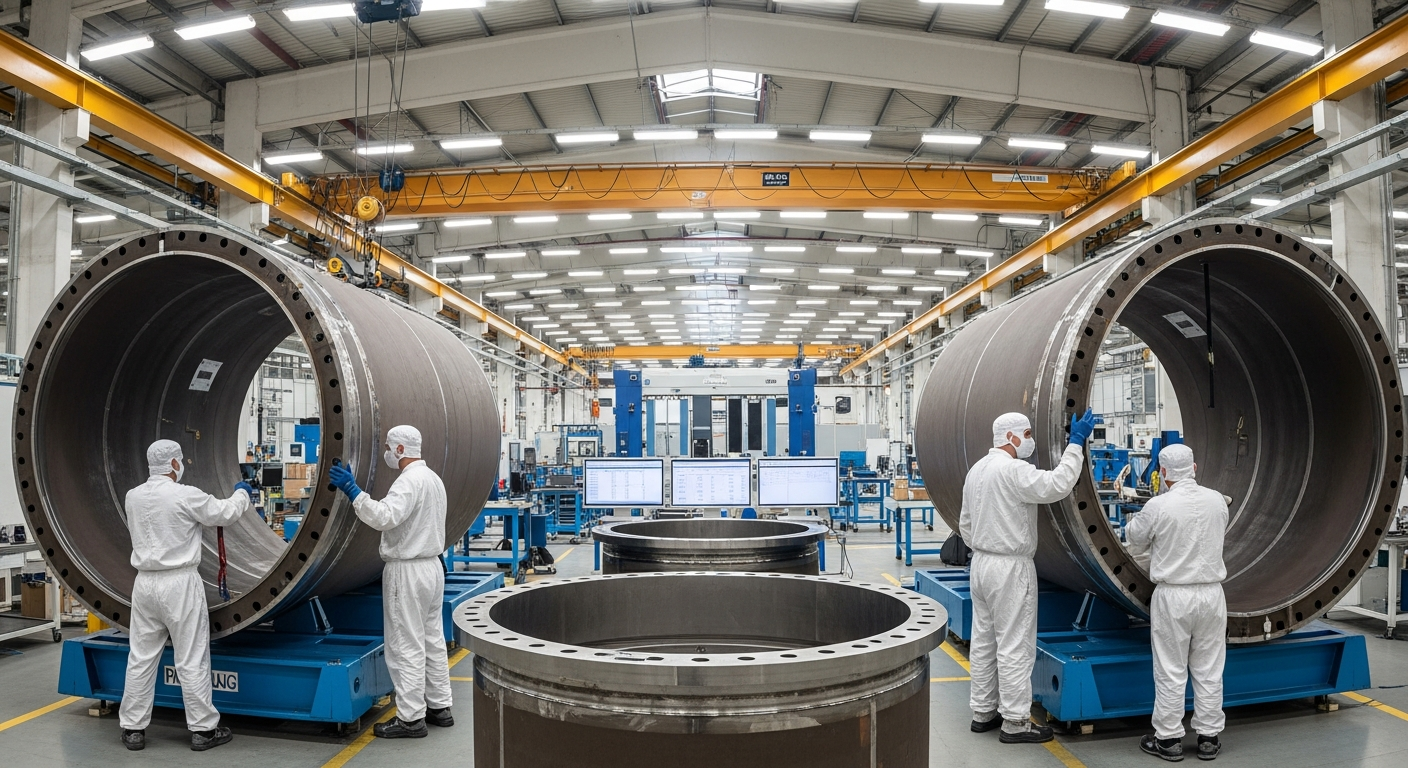
- Supply chain gaps for specialist components, including reactor pressure vessels, zirconium cladding, and high-assay low-enriched uranium fuel.
- Workforce shortages in nuclear engineering; the continent lost a generation of nuclear graduates during the two decades when new build was effectively frozen.
- Competition from rapidly falling battery storage and offshore wind costs, which continue to improve faster than most projections predicted.
No Western SMR design has yet achieved commercial operation. Rolls-Royce SMR's first unit is targeted for the early 2030s at the earliest. NuScale, the American pioneer, cancelled its flagship Utah project in late 2023 after cost estimates roughly doubled. That cancellation sent a chill through the sector and reminded investors that the gap between engineering promise and commercial delivery remains wide.
The workforce point deserves particular attention. ETH Zurich's Energy Science Centre has flagged that Europe will need to train several thousand additional nuclear engineers over the next decade simply to staff existing plants, let alone new ones. The ASML cleanroom model, in which a highly specialised domestic supply chain anchors a globally competitive industry, is the aspiration; the current reality is a sector still rebuilding capability lost during years of political hostility to atomic energy.
The Data Centre Connection
The link between AI investment and nuclear interest is not theoretical. When Microsoft announced its intention to restart a unit at Three Mile Island in the United States, the explicit justification was securing clean baseload power for its AI data centre expansion. In Europe, the same logic is driving conversations between hyperscalers and energy developers. Ireland, which hosts a disproportionate share of European data centre capacity, faces acute grid constraints and has seen renewed political discussion about whether SMRs might eventually form part of its generation mix, a conversation that would have been unthinkable five years ago.
The UK's data centre sector, concentrated in and around London's Canary Wharf corridor and the M4 technology belt, is similarly constrained by grid connection queues running to years. National Grid ESO has warned that connection delays risk deterring investment. SMRs, with their ability to connect closer to demand rather than requiring lengthy transmission infrastructure, address part of that problem directly.
Industrial Policy Meets Atomic Ambition
What is emerging across Europe is less a single coherent strategy and more a patchwork of national bets hedged by EU-level industrial policy. The UK is backing Rolls-Royce SMR as a domestic champion. France is investing in advanced reactor research through state channels. Poland, the Czech Republic, and the Netherlands have all announced or progressed conventional large nuclear projects that will, in turn, rebuild the supply chain and workforce SMRs will depend on. Sweden has reversed its phase-out policy entirely.
The analogy one hears repeatedly in Brussels and London policy circles is to the semiconductor industry: Europe allowed a critical strategic technology to migrate offshore, spent years lamenting the dependency, and is now investing heavily to recover ground. Nuclear, the argument goes, must not follow the same path. With AI demand providing both the financial incentive and the urgency, the political conditions for acting on that lesson have rarely been better aligned.
The atomic age 2.0 is not arriving on a wave of military ambition or cold-war competition. It is being pulled forward by the electricity meter of every GPU cluster humming in a data hall from Dublin to Warsaw. Whether Europe's regulators, workforce, and supply chains can move fast enough to meet that demand is the industrial question of the decade.




Comments
Sign in to join the conversation. Be civil, be specific, link your sources.