

The artificial intelligence industry's period of near-universal goodwill is finished. Across Europe, a broad and increasingly organised coalition of rural communities, trade unions, consumer groups, and politicians from left and right is pushing back against AI expansion with a force that the sector can no longer dismiss as fringe sentiment. What began as isolated planning objections and workshop floor grumblings has matured into a structural challenge to the industry's operating assumptions.
Data Centres Run Into Community Resistance
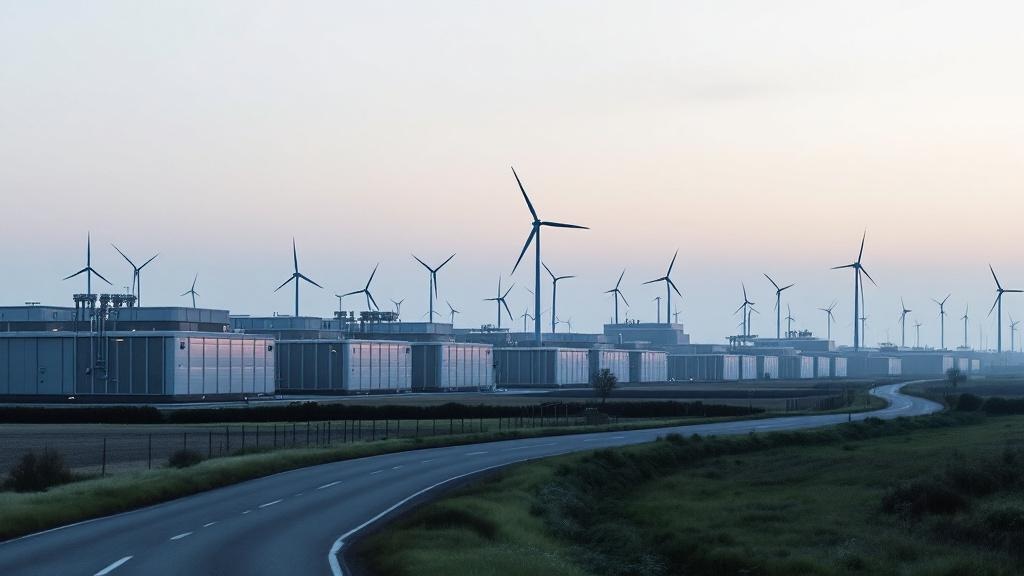
The most visible flashpoint is infrastructure. Data centres, the physical backbone of every large language model and AI service deployed commercially, are encountering fierce local opposition wherever they attempt to put down roots in Europe. Communities in Ireland, the Netherlands, and northern Germany have raised objections over energy consumption, water use, and noise pollution, with several municipalities imposing or threatening outright moratoriums on new construction.
Ireland's grid operator EirGrid has already warned that data centre demand could account for 32 per cent of the country's total electricity consumption by 2031, a figure that has galvanised politicians in Dublin and sent a cautionary signal to planners across the continent. In the Netherlands, the Amsterdam metropolitan authority froze new data centre permits in 2019 and has maintained a cautious stance ever since, citing strain on the electricity grid and drinking water supplies used for cooling.
The pattern is consistent: the benefits of AI feel intangible to local residents, while doubled electricity bills and the constant low-frequency hum of cooling fans are immediate and undeniable. Community campaigns have framed the debate not as anti-technology sentiment but as a straightforward question of who bears the costs of a technology whose profits flow elsewhere.
Employment Disruption Is Not a Future Risk, It Is Happening Now
Parallel to the infrastructure battles, European workers are confronting AI-driven automation in real time. Customer service operations across the UK, Germany, and France are replacing human agents with AI systems, and the results are generating a dual backlash: displaced employees and frustrated customers who report degraded service quality.
Professor Diane Coyle, Bennett Professor of Public Policy at the University of Cambridge, has noted that the current wave of AI deployment is distinguished by its speed rather than its novelty, arguing that policymakers have far less time to design adaptive labour-market responses than they did during previous periods of technological disruption. Her research points to white-collar and semi-skilled service roles as the most exposed in the near term, precisely the categories that European welfare states are least well-equipped to retrain at scale.
The corporate logic is straightforward: AI agents are cheaper than human agents. But the consumer response is proving more complicated. Surveys conducted across EU member states consistently show that majorities prefer human interaction for complex service queries, and some consumers have begun actively avoiding companies perceived to have eliminated human support entirely. Organisations that treated AI deployment as a pure cost-cutting exercise are discovering that service quality degradation carries its own commercial penalty.
Sector-Level Disruption at a Glance
- Customer service: Automated agents replacing human roles from 2024 onwards, with high consumer pushback already registered in the UK and Germany.
- Manufacturing: Robotic automation accelerating across Central and Eastern European production facilities, with growing union opposition in Poland and Czechia.
- Content creation: AI-generated media proliferating across European digital platforms, prompting collective action by writers and illustrators.
- Data processing and back-office: White-collar displacement emerging in financial services and legal sectors, with professional bodies in London and Frankfurt raising formal concerns.
AI-Generated Misinformation Is Eroding Digital Trust
The democratisation of generative AI tools has produced a surge in malicious and low-quality content that is systematically degrading trust in online information. Art forgeries, deepfake fraud, and industrial-scale misinformation campaigns are now standard features of the European digital landscape, not exceptional incidents.
The phenomenon has acquired its own pejorative label: AI slop, denoting the vast quantities of formulaic, inaccurate, or manipulative content generated cheaply and at speed. Europol issued a warning in early 2024 that generative AI is materially lowering the barrier to entry for fraud and disinformation operations, with member states' law enforcement agencies reporting sharp increases in AI-assisted financial scams targeting older demographics in particular.
The European AI Office, established under the EU AI Act framework, has identified synthetic content and deepfakes as a priority enforcement area, but regulatory capacity is still being assembled. Andrea Renda, Senior Research Fellow and Head of Global Governance, Regulation, Innovation and the Digital Economy at the Centre for European Policy Studies in Brussels, has argued publicly that enforcement timelines under the AI Act are too slow relative to the speed at which harmful applications are proliferating, and that interim measures are urgently needed.
Political Opposition Now Crosses Traditional Boundaries
Perhaps the most significant development is that resistance to unchecked AI development no longer maps neatly onto left-right political lines. In the European Parliament, MEPs from the Greens, the Socialists, and the European Conservatives and Reformists have all tabled questions or reports expressing concern about AI's environmental footprint, employment impact, and governance gaps. That cross-partisan convergence echoes the unusual alliances forming in national legislatures from Westminster to the Bundestag.
Activist organisations including Pause AI, which has members active in London, Berlin, and Amsterdam, have escalated their tactics to include hunger strikes and sustained protests outside AI company offices, demanding a moratorium on frontier AI development until governance frameworks are robust enough to manage the risks. While their maximalist position commands limited mainstream support, their visibility has shifted the Overton window on what counts as a reasonable regulatory ambition.
The regulatory landscape across the EU and UK remains uneven. The EU AI Act provides a risk-tiered framework but its high-risk provisions will not be fully operational until 2026. The UK, having opted for a sector-led approach post-Brexit, is under growing pressure from parliamentarians and civil society to move faster on binding rules. Neither trajectory is moving at a pace that matches the speed of deployment on the ground.
The Industry Must Respond to Legitimate Concerns, Not Just Manage Them
The opposition building across Europe is not a temporary sentiment cycle that the AI industry can wait out. Environmental costs tied to data centre energy and water consumption are structural, not incidental. Employment disruption in service sectors is accelerating, not stabilising. And the erosion of digital trust from AI-generated misinformation compounds every other problem the industry faces, because it undermines the credibility of the genuine benefits AI can deliver.
Companies operating in Europe, whether hyperscalers locating infrastructure here or enterprises deploying AI in customer-facing roles, will face escalating regulatory, commercial, and community pressure unless they engage substantively with these concerns. Transparent environmental reporting, meaningful human-oversight options in consumer services, and proactive dialogue with affected communities are no longer optional good-practice add-ons. They are table stakes for operating in a European market that is demonstrably losing patience with growth-first, governance-later thinking.

Comments
Sign in to join the conversation. Be civil, be specific, link your sources.