AI Artists Are Charting Weekly: What It Means for Europe's Music Industry
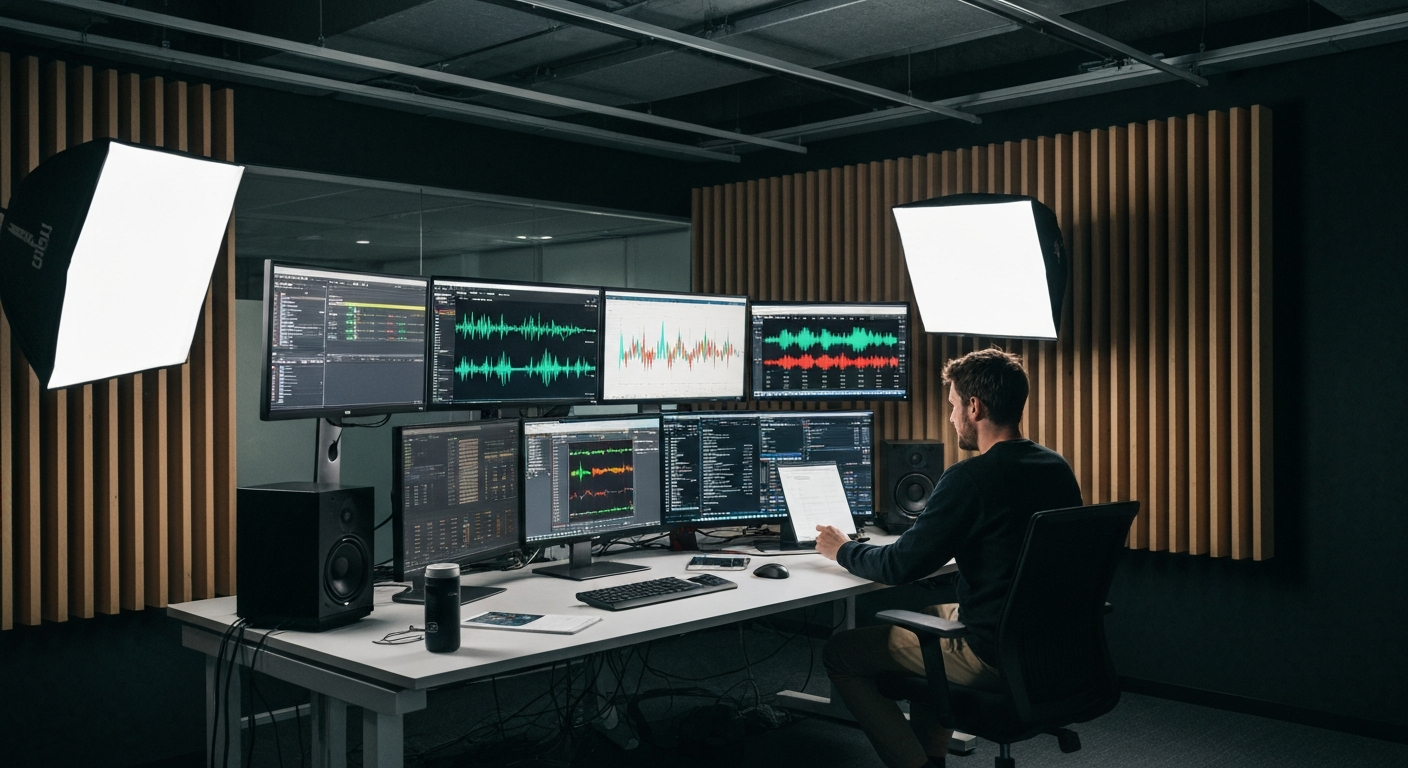
Artificial intelligence acts are claiming positions on major music charts every week, racking up tens of millions of streams and attracting multimillion-pound label deals. As the phenomenon accelerates, Europe's rights holders, regulators and streaming platforms face urgent questions about copyright, fair compensation and the long-term shape of the recorded-music market.
AI-generated acts are no longer a curiosity confined to niche playlists: they are charting weekly, pulling in millions of streams, and forcing the European music business to confront a structural shift it is ill-prepared to manage.
[[KEY-TAKEAWAYS:AI acts now chart weekly on Billboard and reach millions of Spotify listeners globally|Deezer receives 10,000 AI-generated tracks daily, representing 10% of all uploads|Universal Music Group struck the first major-label licensing deal with an AI music platform|EU and UK copyright frameworks are under acute pressure as AI training on unlicensed material continues|Platform responses range from mass removal of spam tracks to cautious licensing partnerships]]
Advertisement
The numbers are stark. Xania Monet, an AI avatar built on the Suno platform, became the first AI act to chart on Billboard's Adult R&B Airplay, debuting at number 30. Her track "How Was I Supposed to Know?" accumulated 17 million streams in the United States alone. Breaking Rust reached number one on Billboard's Country Digital Song Sales and now claims two million monthly Spotify listeners. The Velvet Sundown has attracted 1.4 million monthly listeners, with their track "Dust on the Wind" crossing two million streams. These are not edge cases; they are a pattern.
For European observers, the chart activity happening primarily in the American market is a leading indicator, not a distant footnote. The streaming economy is borderless, and the rights disputes now erupting in US courts will set precedents that land directly on the desks of lawyers in Berlin, Amsterdam and London. Europe's response will define whether the continent's artists and labels capture value from this transition or simply absorb the costs of it.
The Scale of the Influx
Platform-level data illustrates just how fast AI-generated music is flooding the ecosystem. Deezer now receives approximately 10,000 AI-generated tracks every single day, accounting for roughly 10% of all uploads to the service. Spotify, headquartered in Stockholm and therefore subject to both Swedish and EU regulatory pressure, removed 75 million tracks identified as AI spam by late 2025. The platform has stopped short of an outright ban, arguing instead that "music has always been shaped by technology" and that AI could "unlock incredible new ways for artists to create." That carefully worded position is being watched closely by rights organisations across Europe.
The broader market context matters here. US recorded-music revenues reached $5.6 billion at the halfway point of 2025, with streaming accounting for 84% of consumption and 105 million paid subscriptions underpinning growth. European markets are structurally similar: the IFPI's most recent data consistently shows streaming representing the majority of recorded-music revenues in the UK, Germany, France and the Nordics. AI-generated content entering at scale therefore does not arrive into a static market; it arrives into one already dominated by the streaming economics that make volume, not quality, the primary driver of revenue allocation.
Helienne Lindvall, a songwriter and longtime advocate for creator rights who has given evidence to UK parliamentary committees on music licensing, has been among the clearest European voices on the danger. She has repeatedly argued that AI systems trained on unlicensed catalogues represent a systemic extraction of value from working musicians, not a marginal technical dispute. Her position reflects a growing consensus among professional songwriters across the EU and UK that voluntary measures from platforms are insufficient.
Copyright: The Central Battleground
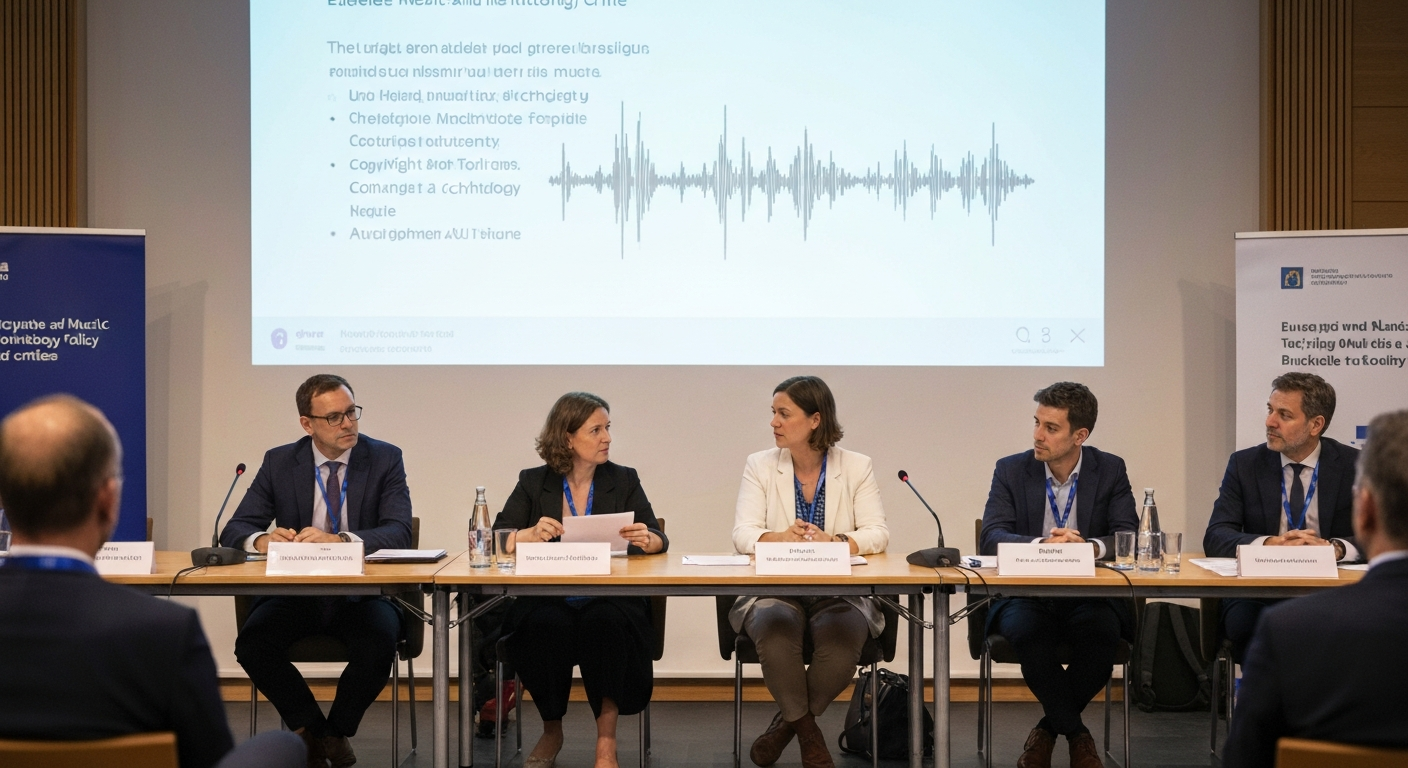
The copyright question is where European policy diverges most sharply from the current US approach. AI music generators including Suno and Udio face accusations of having trained their models on copyrighted recordings without permission or payment. In the EU, the text-and-data-mining exemption under the 2019 Copyright in the Digital Single Market Directive allows AI training on lawfully accessed works unless rights holders opt out. That opt-out mechanism is, in practice, difficult to enforce at scale, and its adequacy for generative AI was never stress-tested during the Directive's drafting.
The UK's position is, if anything, even more contested. The previous government consulted on a broad text-and-data-mining exception that would have permitted AI training without licensing; that proposal was shelved following fierce resistance from the creative industries, but the underlying policy tension has not been resolved. The current government has signalled it wants the UK to be an "AI-friendly" jurisdiction, a framing that creative unions and rights organisations regard with considerable suspicion.
Andrus Ansip, the former European Commission Vice-President for the Digital Single Market and one of the architects of the EU's digital copyright framework, has consistently maintained that rights holders must retain meaningful control over how their works are used in AI training. His view, shared by the European Parliament's Intergroup on Creative Industries, is that the opt-out model needs strengthening rather than weakening as generative AI matures.
Meanwhile, artists across the continent are organising. Open letters demanding that AI developers cease using copyrighted material without consent have attracted signatures from hundreds of European musicians. The sentiment echoes the broader concern: that decades of recorded creative work are being consumed to build commercial AI products, with none of the resulting value flowing back to the humans who created the source material.
The Universal Music Group Pivot and What It Signals
Universal Music Group (UMG) has made the most significant industry move to date by striking a licensing deal with Udio, settling a prior copyright infringement case in the process and announcing a jointly developed AI creation platform slated for 2026. The platform will run on generative AI trained exclusively on authorised and licensed music, which UMG frames as a responsible alternative to the unlicensed training approach that prompted the original litigation.
The strategic logic is straightforward. UMG's catalogue is one of the most valuable in the world. Rather than litigate indefinitely while AI platforms grow in reach and revenue, the label has chosen to monetise access to that catalogue under controlled conditions. The key elements of this approach are:
Guaranteed licensing revenue from AI-generated content that draws on UMG's catalogue
Contractual control over how its artists' recordings are used in AI training
First-mover positioning in legitimate AI music partnerships ahead of competitors
Significant reduction in litigation costs compared to sustained copyright battles
New revenue streams from human-AI collaborative projects developed under the partnership
Whether this template is replicable across Europe's more fragmented rights landscape is an open question. Unlike the US market, where a handful of major labels control a dominant share of commercially relevant recordings, Europe has a much larger number of independent labels, collecting societies and national rights management organisations. Licensing frameworks that work cleanly for UMG may require extensive adaptation before they function across, say, the combined repertoires managed by SACEM in France, PRS for Music in the UK, and GEMA in Germany simultaneously.
The Democratisation Argument and Its Limits
Proponents of AI music tools consistently cite democratisation: independent creators can now produce commercially competitive recordings without expensive studio time, session musicians, or years of formal training. That argument has genuine substance. Barriers to entry in recorded music have fallen dramatically, and AI tools represent the latest and most dramatic step in that process.
However, the democratisation framing obscures a distributional question. If AI tools are trained primarily on the catalogues of successful human artists, then the aesthetic and stylistic norms encoded into those tools reflect existing power structures in the industry rather than genuinely new creative directions. The result may be a larger volume of music that sounds more homogeneous, not more diverse. For European markets that have historically used public funding, quota systems, and radio prominence rules to protect cultural and linguistic diversity in music, this is a material policy concern rather than an abstract one.
Quality control and market saturation are equally pressing. Spotify's removal of 75 million tracks confirms that a significant proportion of AI-generated uploads are low-quality spam designed to game streaming royalty systems rather than reach genuine listeners. That behaviour directly reduces the per-stream payments flowing to legitimate artists, human or otherwise, and places compliance burdens on platforms that ultimately get passed through to rights holders.
The trajectory is clear: AI acts will continue to appear on charts, streaming numbers will keep climbing, and the pressure on regulators and rights organisations to develop workable frameworks will intensify. The question for Europe's music industry is not whether to engage with this reality but how quickly it can build the structures needed to do so on terms that protect working artists while allowing genuine innovation to proceed.
Updates
published_at reshuffled 2026-04-29 to spread distribution per editorial directive
AI Terms in This Article4 terms
generative AI
AI that creates new content (text, images, music, code) rather than just analyzing existing data.
at scale
Applied broadly, to a large number of users or use cases.
ecosystem
A network of interconnected products, services, and stakeholders.
pivot
Fundamentally changing a business strategy or product direction.
Advertisement
Comments
Sign in to join the conversation. Be civil, be specific, link your sources.




Comments
Sign in to join the conversation. Be civil, be specific, link your sources.