The $650 Billion AI Infrastructure Race: Why Big Tech Is Now Betting on Europe
Big Tech is pouring $650-720 billion into AI infrastructure in 2026, a 60% year-on-year surge. Europe is competing hard for its share, but an adoption gap, power constraints, and geopolitical complexity mean the continent must move faster to capture lasting economic value from this historic capital wave.
The race for AI dominance has moved well beyond silicon chips and algorithms. It is now being fought in concrete, steel, and electrical grids, and Europe is squarely in the arena. In 2026, Big Tech is pouring an unprecedented $650-720 billion into artificial intelligence infrastructure globally, a 60% year-on-year increase from 2025, and European governments, regulators, and enterprises are scrambling to attract, absorb, and shape that capital before it concentrates elsewhere. This spending surge signals a fundamental shift in how technology giants compete: no longer just in innovation, but in the physical foundation that powers it.
[[KEY-TAKEAWAYS:Big Tech's 2026 AI capex totals $650-720 billion, up 60% year on year|Europe must compete on power, regulation, and talent to win infrastructure deals|79% of organisations globally struggle to deploy AI beyond the proof-of-concept stage|Power supply is now the single binding constraint on new data centre capacity|Countries with stable grids and supportive policy will capture disproportionate long-term value]]
Advertisement
For Europe, this moment carries both enormous opportunity and a credible risk of being outmanoeuvred. The continent offers mature regulatory frameworks, world-class research institutions, and a growing cloud infrastructure base. But it also faces acute power constraints, a fragmented single market for data services, and a well-documented enterprise adoption gap. Understanding where the money is going, and why, is essential for anyone tracking where AI is actually being built.
The Trillion-Dollar Wager
The scale of Big Tech commitment is difficult to overstate. The five dominant spenders have made the following 2026 capital expenditure pledges:
Amazon: $200 billion committed to AI infrastructure globally
Alphabet: $175-185 billion across data centres, networking, and compute
Meta: $115-135 billion, heavily weighted towards GPU clusters
Microsoft: $120 billion or more, with significant European commitments
Oracle: $50 billion in cloud and AI capital expenditure
These are not incremental budget increases. The 60% year-on-year jump from 2025 reflects a strategic conviction that AI infrastructure is now a prerequisite for competitive survival. Each dollar spent on data centres, GPUs, and power infrastructure buys optionality: the ability to train larger models, serve more users, and capture emerging use cases before rivals do.
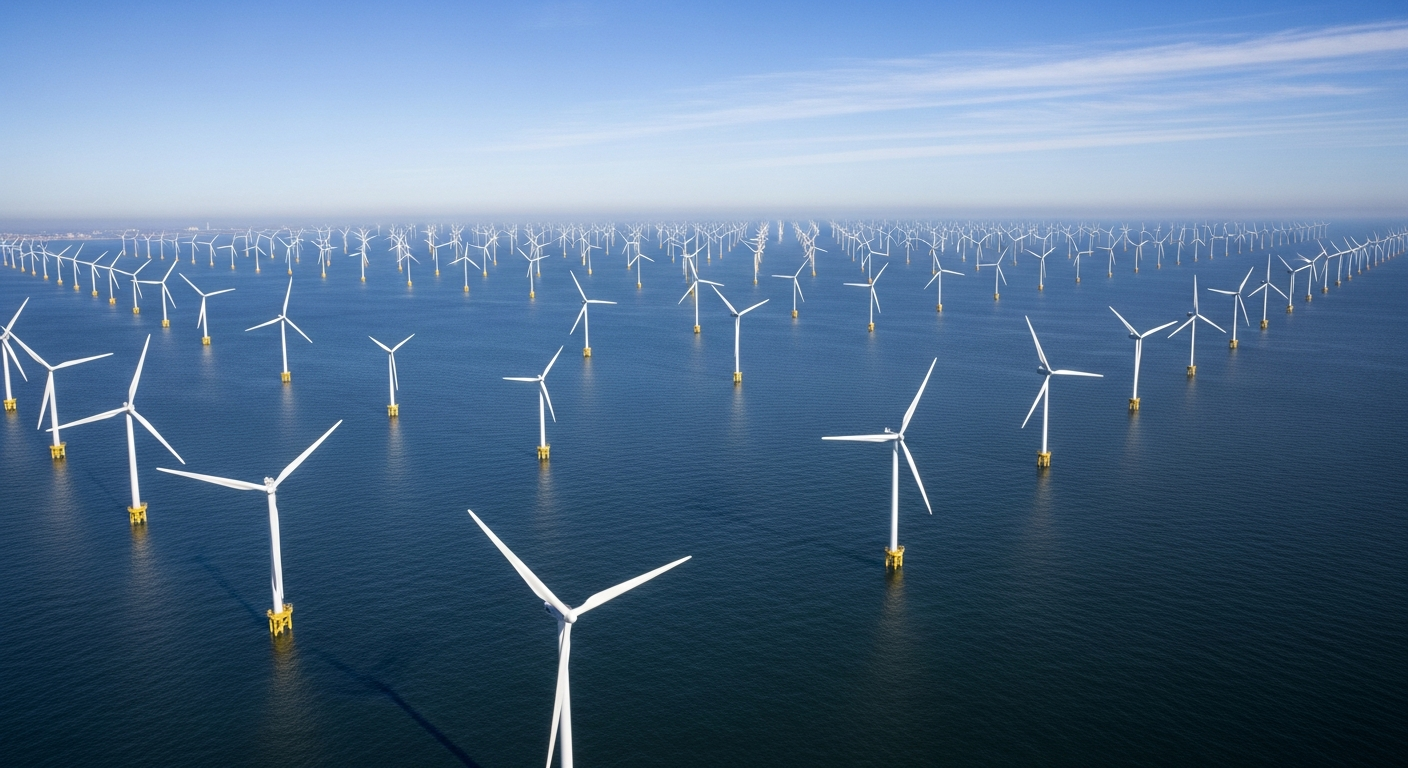
Europe's attractiveness in this race rests on three pillars: a large, high-income consumer and enterprise market; improving renewable energy capacity, particularly in Scandinavia and Iberia; and a regulatory environment that, for all its complexity under the EU AI Act, provides the legal certainty that global corporations require before committing decade-long infrastructure investments.
Microsoft's European Blueprint
Microsoft's announced investments offer the clearest window into how Big Tech is deploying capital in Europe. The company has committed to a substantial expansion of its European data centre footprint, with investments spanning Germany, Sweden, Spain, Poland, and the United Kingdom. These are not token gestures. They represent commitments to build out production capacity, employ local talent, and establish deep partnerships with national governments and enterprise customers.
The geographic spread reflects deliberate strategic calculation. Germany offers industrial enterprise demand and a government keen to anchor sovereign AI capability on home soil. Sweden and Finland provide some of the most competitive renewable energy costs on the continent, alongside political stability. The United Kingdom, post-Brexit, is actively positioning itself as a pro-innovation AI hub, with the government's AI Opportunities Action Plan setting out ambitions to attract precisely this class of hyperscaler investment.
Margrethe Vestager, the former European Commission Executive Vice President for A Europe Fit for the Digital Age, set the political tone for this competition long before the current spending wave arrived, arguing consistently that Europe must build sovereign digital infrastructure rather than remain dependent on non-European cloud providers. That argument has only become more urgent as capex numbers climb.
Similar patterns are visible across Amazon Web Services and Google Cloud. Each is betting on multiple European countries rather than concentrating everything in a single hub. This redundancy is intentional: it hedges geopolitical risk, ensures compliance with GDPR and the EU AI Act, and builds relationships with national governments that will shape AI policy for years to come.
The Infrastructure Crunch
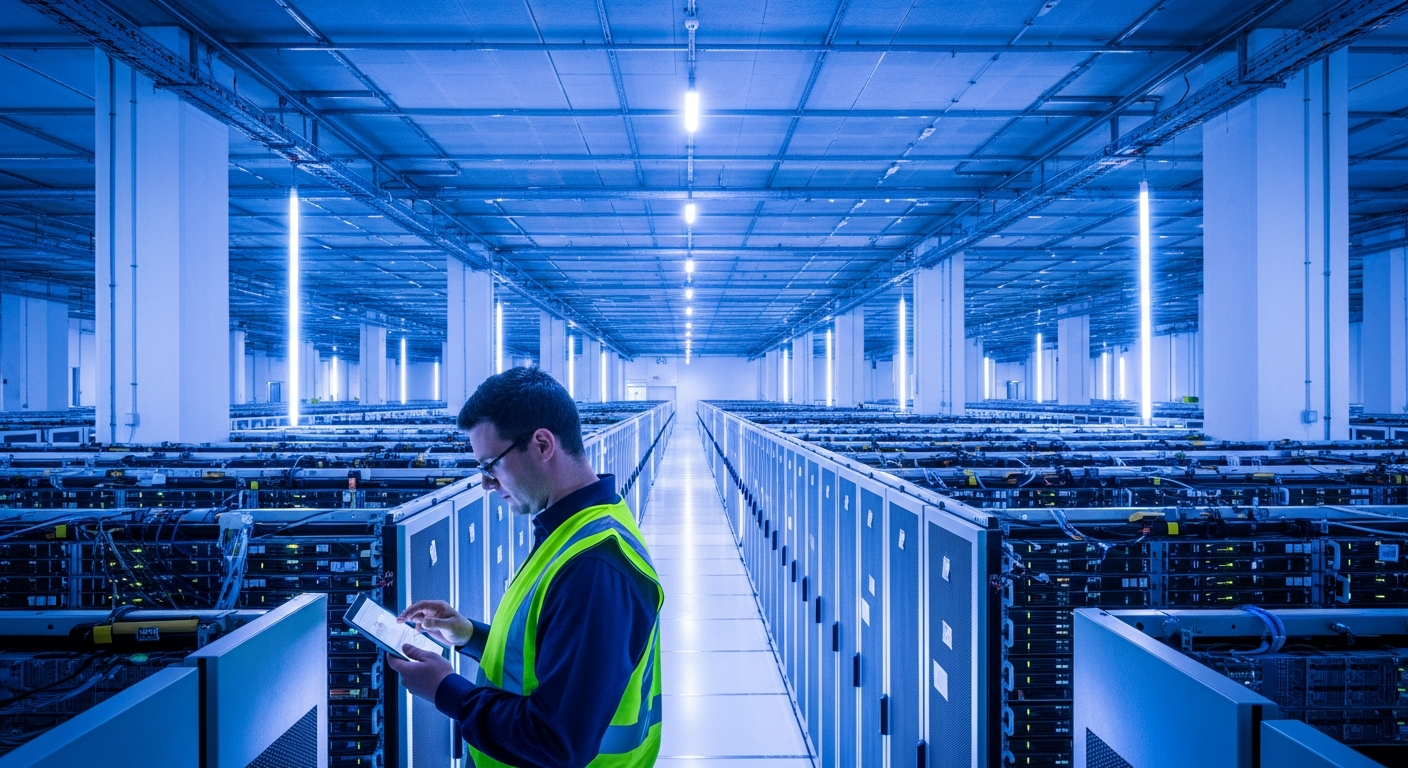
All this capital is being deployed against a backdrop of extraordinary infrastructure strain. Data centre power demand across Europe is expected to surge dramatically through 2030, driven by the computational requirements of modern large language models, which consume electricity at scales that traditional data centre management was never designed to handle.
Power is now the single binding constraint. Every major Big Tech player is negotiating with European governments, national grid operators, and renewable energy developers to secure stable, affordable electricity. The International Energy Agency has flagged data centre electricity demand as one of the fastest-growing load categories in its European grid projections, a finding that has focused the minds of energy ministers from Dublin to Warsaw.
Professor Yoshua Bengio's work on AI compute scaling aside, the practical energy politics of European AI infrastructure have fallen squarely to bodies such as ENTSO-E, the European Network of Transmission System Operators for Electricity, which is actively modelling the grid impact of concentrated hyperscaler investment. Without coordinated grid expansion, the risk is that planned data centres simply cannot get power connection agreements within commercially viable timescales.
Companies with the best relationships with regional energy providers, and the capital to back long-term power purchase agreements, will win the largest share of European capacity. Those without those relationships will find sites stalled and budgets eroded by delay.
The Startup Accelerant
Big Tech's infrastructure spending is not solely about their own model training. It is creating a significant opportunity for European AI startups and scaleups. When hyperscalers build out cloud capacity in Frankfurt, London, or Stockholm, they lower the barrier to entry for every founder who would otherwise need to self-host GPU clusters. Startups can rent compute from AWS, Azure, or Google Cloud, allowing teams to focus on model development, product-market fit, and customer acquisition rather than data centre operations.
The results are visible in European venture data. Mistral AI in Paris has become a flagship example of what is possible when European founders combine access to hyperscaler compute with strong research talent and a favourable regulatory environment. The company's rapid progression from founding to frontier-model deployment was enabled in part by the maturing European cloud infrastructure ecosystem.
Private infrastructure providers are also moving. Colocation and wholesale data centre operators are expanding aggressively across Europe, betting that compute demand will sustain high utilisation rates and healthy margins for years. This is infrastructure capitalism at scale, and Europe's established property and energy markets make it a natural destination.
The Adoption Gap Nobody Talks About
All this infrastructure investment assumes demand. But adoption is lagging badly. A McKinsey analysis found that 79% of organisations globally report significant challenges in deploying AI effectively beyond the pilot stage. Only around 20% are generating measurable revenue from AI initiatives. Two-thirds of companies testing AI remain stuck in proof-of-concept, unable to scale to production.
In Europe, the adoption challenge carries an additional dimension. The EU AI Act imposes compliance obligations that, while necessary for public trust, add friction to enterprise deployment. Legal teams are still interpreting obligations around high-risk AI systems. Procurement cycles in regulated sectors, including finance, healthcare, and critical infrastructure, are extending as organisations wait for regulatory clarity.
This gap creates a clear opportunity for a different class of player:
Software vendors building AI-native applications on top of hyperscaler infrastructure
System integrators helping enterprises move from pilot to production at scale
Management consultancies defining AI governance frameworks that satisfy regulators
Specialist legal and compliance firms interpreting the EU AI Act for enterprise clients
Big Tech recognises the adoption challenge and is investing to solve it. Microsoft's Copilot enterprise programme, Alphabet's Vertex AI platform, and Amazon's Bedrock service all reflect a strategy to own not just the infrastructure layer but the adoption layer as well. The company that helps a German manufacturer or a French bank move from AI experiment to AI-in-production will capture recurring revenue that dwarfs a one-time cloud migration fee.
The Geopolitical Dimension
Infrastructure spending is also a form of soft power, and European policymakers are alert to this. Each data centre, each GPU cluster, each power agreement signals commitment to a country and builds relationships with its government. Countries that attract hyperscaler investment develop deeper technical expertise, draw in more venture-backed startups, and strengthen their policy frameworks to remain competitive. Countries that miss early waves of investment struggle to build the talent base and physical infrastructure necessary to catch up.
For mid-tier European economies, the competitive dynamics are real. Poland, Romania, Greece, and Portugal are all positioning aggressively to attract infrastructure spending. The winners will see sustained job creation, technology transfer, and economic growth anchored in genuinely productive AI deployment. The risk for those that fall behind is relegation to the role of data source and consumer market rather than innovation hub, a status no European government wants to accept.
The European Commission's AI continent ambitions, expressed through initiatives including the AI Factories programme and the EuroHPC Joint Undertaking, are an explicit attempt to ensure that public investment complements private capital rather than ceding the field entirely to non-European hyperscalers. Whether public funding at the scale currently committed is sufficient to shift the balance is an open question, but the political intent is clear.
Updates
published_at reshuffled 2026-04-29 to spread distribution per editorial directive
AI Terms in This Article6 terms
GPU
Graphics Processing Unit, the powerful chips that AI models run on.
at scale
Applied broadly, to a large number of users or use cases.
world-class
Of the highest quality globally.
ecosystem
A network of interconnected products, services, and stakeholders.
product-market fit
When a product satisfies strong market demand.
AI governance
The policies, standards, and oversight structures for managing AI systems.
Advertisement
Comments
Sign in to join the conversation. Be civil, be specific, link your sources.




Comments
Sign in to join the conversation. Be civil, be specific, link your sources.