Synthesia's London IPO talk: what a public listing would say about European AI
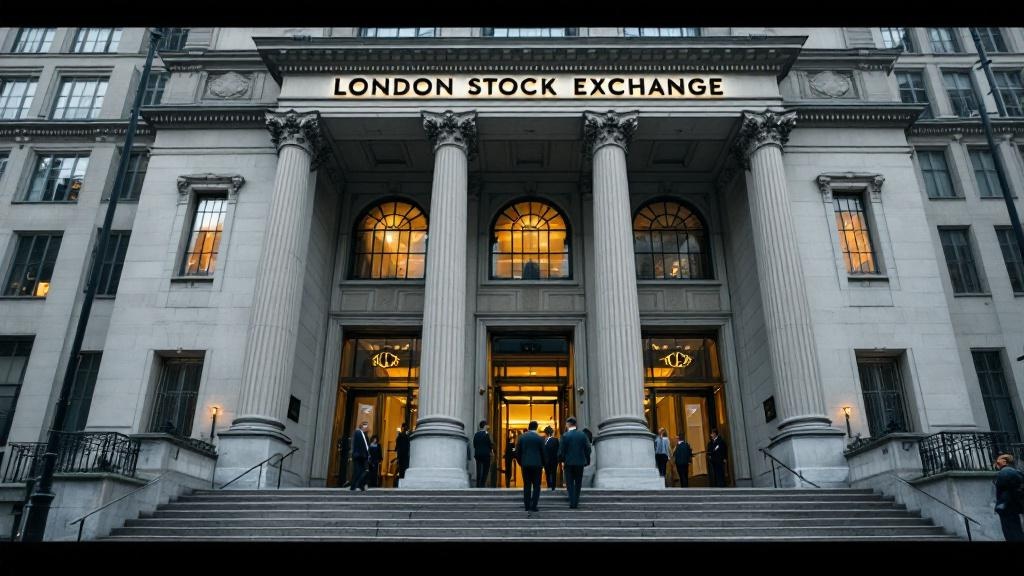
Synthesia, the London-built avatar-video AI company, is reportedly eyeing a 2027 IPO on the London Stock Exchange. If it happens, it would mark the first major AI scale-up to choose London over New York in the modern era, and deliver a badly needed confidence injection to European tech capital markets.
Synthesia choosing London over New York for its public debut would be the single most consequential signal European AI has sent to global capital markets in at least a decade.
The company, founded in 2017 by Victor Riparbelli, Steffen Tjerrild, Lourdes Agapito, and Matthias Niessner, has built one of the most commercially coherent AI businesses on the continent. Its platform lets enterprises generate video content using AI avatars, replacing expensive studio shoots with browser-based production. It is not a research lab, not a foundation-model moonshot, and not a defence contractor pivoting to AI. It is a business with paying customers, a clear use case, and, reportedly, a credible path to profitability.
Advertisement
According to reporting by Sifted and corroborated by broader market commentary, Synthesia has been in early conversations about a potential initial public offering on the London Stock Exchange, with 2027 cited as a realistic target window. The company declined to confirm specifics publicly, which is standard practice at this stage. What matters is that the conversation is happening at all, and that London is in the frame.
"Synthesia is not the largest AI company in Europe, but it may be the most symbolically legible one for public market investors. It sells a product, and that legibility is genuinely valuable in an IPO context."
Editorial analysis
The funding trajectory makes the IPO case coherent. Synthesia raised a $90 million Series C in June 2023, led by Accel, with participation from existing investors including GV (formerly Google Ventures) and Kleiner Perkins. That round valued the company at $1 billion, making it a confirmed unicorn. A Series D or pre-IPO round, should it materialise before 2027, would likely push that valuation considerably higher. The company has consistently cited enterprise adoption as its growth engine, with clients including Heineken, Reuters, and the BBC.
Why London, and Why Now
The cynical reading is that London is a consolation prize. The optimistic reading is that it is a strategic choice. The honest reading is that it is both, and that the distinction matters less than the outcome.
The London Stock Exchange has been fighting hard to reverse a multi-year listing drought among high-growth technology companies. The Financial Times documented extensively in 2023 and 2024 how a string of UK tech firms, including chip designer Arm, chose New York over London for their public debuts. Arm's September 2023 Nasdaq listing, despite the company being headquartered in Cambridge and majority-owned by SoftBank, was widely read as a humiliation for the LSE and for the UK government's ambitions to position London as a global tech finance hub.
The response from policymakers and the exchange itself has been substantive, if belated. The LSE introduced its new Commercial Companies regime in 2024, simplifying dual-class share structures and relaxing free-float requirements. The Financial Conduct Authority, under pressure from the Treasury, pushed through listing rule reforms that came into effect in July 2024. These changes were designed precisely to make London competitive with the Nasdaq for founder-led, high-growth companies.
What Synthesia Represents
Synthesia is not the largest AI company in Europe, but it may be the most symbolically legible one for public market investors. Unlike Mistral AI in Paris, which is building foundation models and therefore requires investors to understand long-horizon infrastructure bets, or DeepMind in London, which remains a subsidiary of Alphabet and is therefore not a listing candidate, Synthesia sells a product. Enterprise video generation is a market that procurement officers, CFOs, and buy-side analysts can price. That legibility is genuinely valuable in an IPO context.
It also means the company faces a different kind of scrutiny. Generative video is a crowded category. Runway, HeyGen, and D-ID all compete in overlapping segments. The bull case for Synthesia rests on enterprise entrenchment, compliance features, and brand safety controls that consumer-facing rivals do not prioritise in the same way. Whether public market investors will assign a premium to that positioning, or discount it as incremental defensibility rather than structural moat, is precisely the question a roadshow would have to answer.
The Broader Stakes for European AI Capital
The European AI sector has a structural funding problem that is well-documented and only partially improving. Dealroom and Sifted data consistently show that European AI companies raise smaller rounds, at lower valuations, and exit at lower multiples than comparable US firms. Part of that is market depth. Part of it is investor risk appetite. And part of it is the absence of a credible, high-profile public market success story to anchor expectations.
A Synthesia IPO on the LSE, executed cleanly and at a credible valuation, would change the narrative in a concrete way. It would give European AI founders a local comparator for their own exit planning. It would give institutional investors a liquid AI equity to hold without routing capital through US exchanges. And it would give the UK government a genuine data point to support the argument that London's listing reforms are working.
The UK's Department for Science, Innovation and Technology has made AI listing ambitions a visible policy priority, with ministers repeatedly citing the need to retain high-growth AI companies within the domestic capital markets ecosystem. A Synthesia listing would be the most direct possible validation of that agenda.
The scale of Synthesia's growth and the broader context of London's tech listing ambitions can be understood through a handful of concrete data points that frame just how significant a successful IPO would be, both for the company and for the wider European AI ecosystem.
The Risk That Remains
None of this is certain. IPO timelines slip. Market windows close. Valuations disappoint. Arm's London snub was partly about liquidity depth, and that depth has not dramatically improved since 2023. Synthesia could still choose New York, could choose a dual listing, or could choose to remain private for longer if growth capital remains available at acceptable terms.
The question is not whether Synthesia will definitely list in London. The question is whether the conditions now exist for it to make that choice rationally, without sacrificing valuation or liquidity. The honest answer is: possibly, for the first time. That is progress, even if it is not a guarantee.
THE AI IN EUROPE VIEW
The instinct to call a potential Synthesia London IPO a watershed is correct, but it comes with a caveat that the European AI sector needs to hear plainly. One listing does not fix a structural problem. The LSE's reforms are real and meaningful, but they address process friction, not capital depth. London still cannot offer the liquidity pool that Nasdaq provides to large-cap technology companies, and no regulatory tweak changes that in the short term.
What a Synthesia listing would do is different and arguably more valuable: it would provide proof of concept. European AI founders currently default to US markets not because they have done the analysis and found London wanting, but because the assumption that London is second-best is so entrenched it never gets seriously tested. Synthesia testing it, and succeeding, would force a genuine reconsideration of that assumption across the founder and investor community.
The UK government should not mistake a single IPO for vindication of its broader AI strategy. But it should treat the prospect seriously, clear whatever remaining friction exists in the listing process, and resist the temptation to over-claim. The worst outcome would be a high-profile listing that underperforms because the conditions were not genuinely ready. Get it right once, and the second listing becomes easier. Get it wrong, and the default assumption hardens for another five years.
Updates
published_at reshuffled 2026-04-29 to spread distribution per editorial directive
Byline migrated from "James Whitfield" (james-whitfield) to Intelligence Desk per editorial integrity policy.
AI Terms in This Article6 terms
ecosystem
A network of interconnected products, services, and stakeholders.
moat
A competitive advantage that protects a business from rivals.
runway
How long a startup can operate before running out of money.
unicorn
A privately held startup valued at over $1 billion.
Series C
Later-stage funding for expansion and market dominance.
moonshot
An ambitious, exploratory project with little expectation of near-term profitability.
Advertisement
Comments
Sign in to join the conversation. Be civil, be specific, link your sources.




Comments
Sign in to join the conversation. Be civil, be specific, link your sources.