

A single disputed swimming finish in 1960 changed competitive sport forever, and Europe has been driving the technological response ever since. When Australian John Devitt and American Lance Larson both clocked 55.2 seconds in the men's 100-metre freestyle at the Rome Olympics, yet only Devitt received gold, the sporting world faced an uncomfortable reckoning about the limits of human judgement. That controversy lit a fuse that now burns at the heart of artificial intelligence research, wearable sensors, and predictive analytics across European and global sport.
Omega and the Swiss Timing Legacy
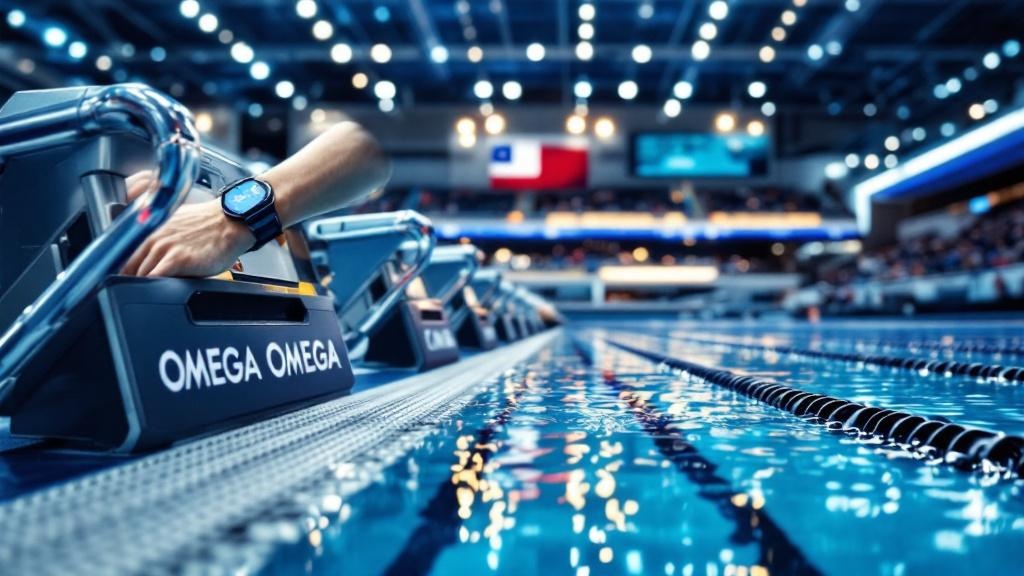
Swiss precision manufacturer Omega, headquartered in Biel, responded directly to the 1960 scandal by developing electronic touch boards for swimming lanes in time for the 1968 Mexico City Games. Today, its innovations extend far beyond eliminating human error in raw timing. AI reshapes every dimension of sports analytics, and Omega's Swiss Timing division sits at the centre of that shift.
"We tell the story of the race, not just the result," says Alain Zobrist, head of Omega's Swiss Timing division. "AI-powered motion sensors on athletes' clothing allow us to understand the full performance, from start to finish."
Omega's Scan-o-Vision system now captures up to 40,000 digital images per second, giving judges definitive evidence for photo finishes that the naked eye simply cannot resolve. Electronic starting pistols connect to speakers positioned directly behind each competitor, guaranteeing simultaneous signal delivery and eliminating the marginal time advantage that proximity to a traditional starter's gun once conferred. These are not incremental improvements; they are categorical changes to what fairness means in elite competition.
The Broader AI Sports Revolution: What the Numbers Say
The integration of AI into competitive sport represents something more fundamental than upgraded kit. Modern AI systems predict match outcomes with 75 to 85 per cent accuracy, comfortably outperforming traditional statistical models that hover around 50 to 60 per cent. Machine learning algorithms now analyse biomechanical data in real time, flag injury risk before an athlete feels a twinge, and optimise training loads based on continuous recovery metrics.
The market opportunity is substantial. AI motion sensors for performance analysis command a 31.7 per cent share of the sports analytics market, growing at a compound annual rate of roughly 27.85 per cent for predictive modelling tools. Injury prevention AI is expanding even faster, at a projected 33.25 per cent CAGR, driven by team owners who have finally grasped that a single avoided cruciate ligament injury more than covers an entire season's analytics budget.
Key applications already transforming competitive sport include:
- Real-time biomechanical analysis during competition for immediate performance feedback
- Predictive injury prevention systems that monitor physiological stress indicators and recommend rest periods
- Automated video analysis for technique improvement and tactical planning
- Fan engagement platforms that deliver personalised viewing experiences and contextualised statistics
- Performance optimisation algorithms that adjust training loads based on recovery data
European Voices: Regulation, Ethics, and the Athlete Data Question
Europe is not simply a consumer of sports AI; it is increasingly setting the terms on which that AI operates. The EU AI Act, which entered into force in August 2024, creates binding obligations for high-risk AI systems, a category that could encompass automated judging and athlete monitoring tools as enforcement guidance matures. Brando Benifei, the Italian MEP who co-led the European Parliament's AI Act negotiations, has consistently argued that transparency and human oversight must sit at the core of any automated decision system, including those used in sport.
That position has real consequences for how clubs and governing bodies deploy these tools. Comprehensive AI monitoring raises legitimate questions about data ownership, athlete consent, and the commercial use of performance information. Sports organisations operating under EU jurisdiction must reconcile the performance optimisation benefits with the data protection requirements of the General Data Protection Regulation, establishing clear governance frameworks for collection, storage, and onward sharing of biometric data.
On the research side, ETH Zurich's Computational Social Science group has published work examining how algorithmic systems reproduce or challenge existing inequalities in sport, a question that becomes pressing when AI-driven scouting tools are used to identify talent across different national and socioeconomic contexts. The institution's proximity to Omega's home canton of Bern gives Swiss sport technology an unusually direct pipeline between fundamental research and commercial application.
What Comes Next: Accelerated Change From 2026
"We have not seen anything yet. In 2026, there will be accelerated transformational change due to the widespread adoption and integration of AI across sports," predicts Wayne Kimmel, managing partner of SeventySix Capital. "This will create more customised and personalised experiences for athletes, coaches, fans, and sports executives."
That forecast aligns with the trajectory visible in European football, cycling, and athletics. Serie A clubs in Italy are already running AI-assisted scouting platforms that cross-reference biomechanical profiles against injury histories. British Cycling has used data analytics as a competitive weapon since the early 2000s; the next generation of tools will make those early systems look rudimentary.
The convergence of AI with traditional sports governance also creates genuinely new possibilities for competitive fairness. Electronic starting systems and high-speed imaging already eliminate many of the subjective judgements that once generated controversy. Future systems could extend that objectivity into areas such as offside calls, contact sport foul assessment, and gymnastics scoring, domains where human bias has historically distorted outcomes.
The 1960 Rome controversy demonstrated how a single moment of technological inadequacy can undermine the legitimacy of an entire competition. The AI systems being developed and deployed across Europe today are, at their core, the latest chapter in a sixty-five-year project to ensure that the best athlete wins, not the one who benefited from a judge's hesitation. That is an ambition worth taking seriously, provided the governance around it is equally rigorous.

Comments
Sign in to join the conversation. Be civil, be specific, link your sources.