1. Distorted or nonsensical text
Early generative models were notoriously poor at rendering readable text; modern systems have improved, but warped characters, nonsensical letter arrangements, and text that does not fit its visual context remain among the most reliable indicators of synthetic origin. If a street sign, menu, or newspaper headline in an image looks almost right but not quite, treat it as a red flag.
2. Anatomical inconsistencies, especially hands
Human hands continue to be a persistent weakness for AI generators. Extra fingers, digits that merge together, missing knuckles, and impossible limb positions appear with surprising regularity even in outputs from leading commercial models. Facial irregularities, including misaligned eyes and disproportionate features, are equally common.
3. The uncanny valley effect
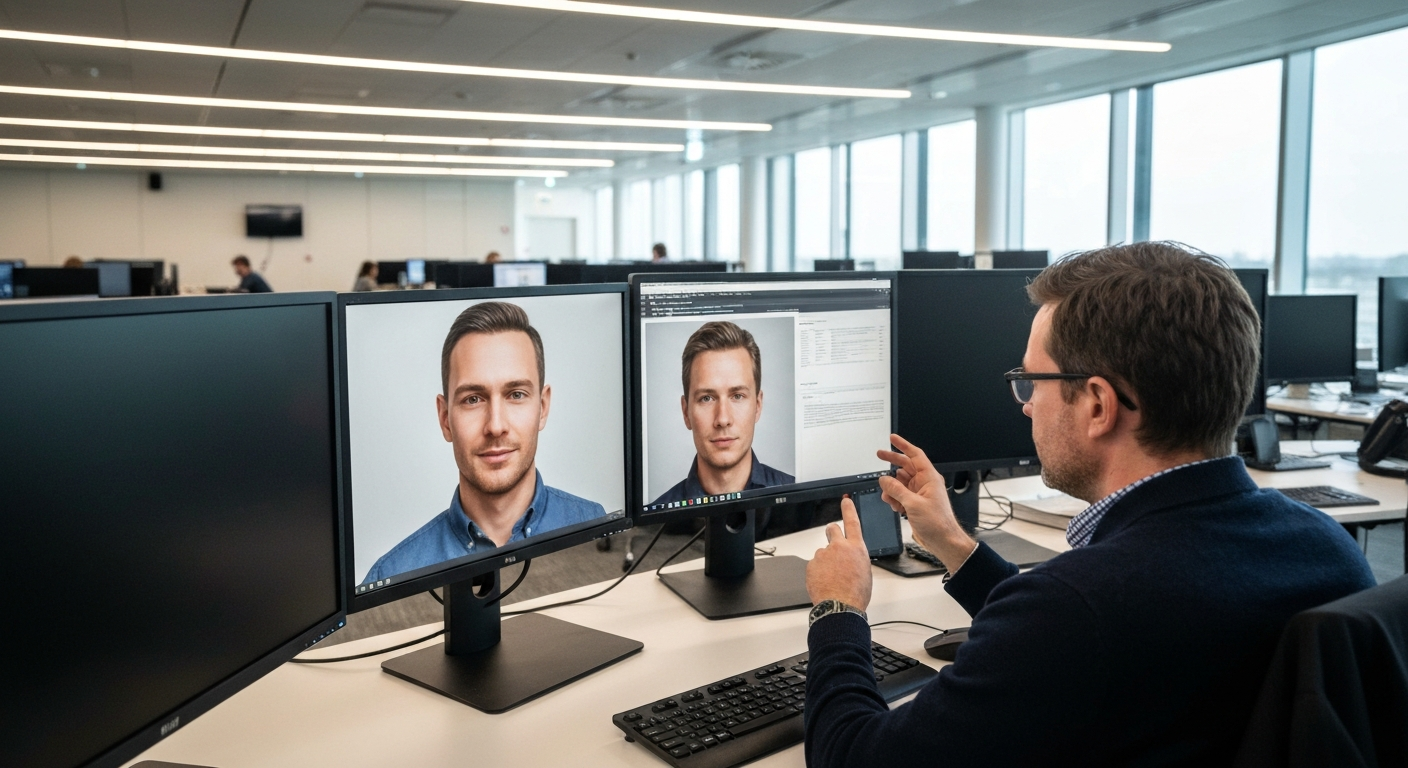
AI-generated faces often trigger an instinctive unease. The skin appears too smooth, almost plasticky. Eyes look glassy or vacant. Hair sits with unnatural perfection. When an image feels somehow "too flawless" in a way you cannot immediately articulate, that instinct is worth trusting. The uncanny valley is not a myth; it is a genuine perceptual response to synthetic imagery that has not yet replicated the imperfections of real human photography.
4. Visual overload and impossible physics
Some AI images betray themselves through sheer excess. Textures repeat in ways that defy logic. Backgrounds are hyper-detailed yet structurally incoherent. Shadows fall at angles that no light source could produce. Reflections violate basic optical physics. If an image feels simultaneously overwhelming and implausible, generative AI is a strong candidate.
5. Unnaturally smooth or simplified surfaces
The opposite extreme is equally telling. AI can strip away authentic granular detail, producing surfaces that look painted rather than photographed. A brick wall loses individual brick definition and becomes a flat red mass. Tree canopies blur into indistinct green shapes. Fabric looks sculpted rather than draped. Apparent sharpness combined with a loss of real-world texture is a strong synthetic signal.
6. Structural and environmental incoherence
Look at the broader scene, not just the subject. AI-generated images frequently contain architectural elements that would collapse in reality, weather conditions that contradict the lighting direction, crowds where faces share suspiciously similar bone structure, and jewellery or glassware with physically impossible reflective properties.
- Impossibly perfect, uniform lighting across an entire outdoor scene
- Backgrounds that lack authentic environmental perspective or logic
- Clothing or fabric that appears sculpted rather than worn
- Crowds where multiple faces share the same underlying structure
- Architectural elements that violate basic engineering principles
- Weather conditions inconsistent with shadow direction or colour temperature
- Jewellery and glassware with reflections that reference no visible light source
A range of technological solutions exists to support AI image identification. None is reliable enough to use in isolation, and European researchers are increasingly vocal about the limits of automated detection.
Hany Farid, a leading digital forensics academic whose work has informed EU-level discussions on synthetic media, has consistently warned that detection tools enter an arms race they are structurally likely to lose. Each new generation of generative models shifts the underlying feature distribution that older detectors were trained to identify, rendering previous tools partially obsolete almost immediately.
On the tooling side, the most accessible options currently available to European users include:
- Google Lens "About this image": Provides contextual information including potential AI origin flags, and is particularly effective when an image carries Google's proprietary SynthID watermark.
- Google Circle to Search (Android): Allows direct image provenance queries from a mobile device.
- Third-party detectors such as Hive Moderation, Illuminarty, and AI or Not: Variable accuracy, with notable false-positive rates on heavily post-processed genuine photographs.
- Reverse image search: Useful for verifying whether an image has an authentic prior existence online, though it does not identify the generation method itself.
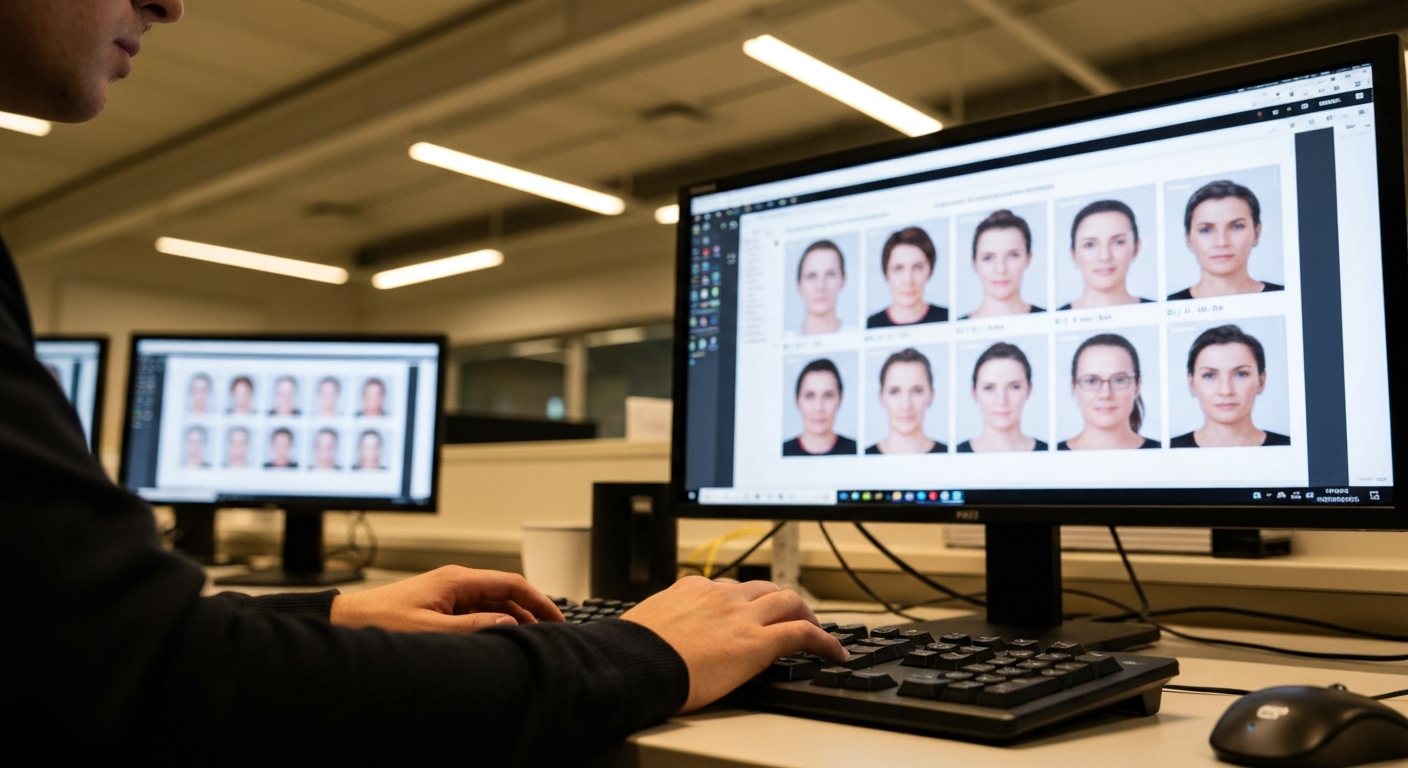
The hard truth is sobering. Research consistently shows that human judges achieve only around 62 per cent accuracy when evaluating real versus AI-generated images, barely exceeding random chance. Automated tools perform at a broadly similar level against state-of-the-art generative outputs.
The European Stakes: Regulation, Advertising, and Public Trust
The challenge is not merely aesthetic. Across EU and UK markets, hyper-stylised AI imagery is proliferating in advertising, e-commerce, and political communications. Restaurants deploy AI-generated food photography that presents dishes as flawless, light-drenched compositions no real kitchen produces. Beauty brands generate model imagery that is physically impossible. Political actors have already used synthetic images in electoral contexts in several European countries.
The EU's AI Act, which entered into force in August 2024, introduces explicit transparency obligations for AI-generated content, including requirements to label deepfakes and synthetic media in many contexts. Dragoș Tudorache, the Romanian MEP who co-led the European Parliament's AI Act negotiations, has repeatedly stated that transparency about synthetic content is a non-negotiable pillar of the regulation, not a secondary concern. The Act places this squarely in the category of high-risk applications requiring human oversight and clear disclosure.
In the UK, Ofcom's ongoing work on the Online Safety Act includes provisions relevant to synthetic media on regulated platforms, and the Information Commissioner's Office has begun examining the data-rights dimensions of AI-generated imagery. Neither framework delivers a technical solution to detection, but both create legal pressure on platforms and deployers to be transparent.
The volume of synthetic content will continue growing. Stable Diffusion alone accounts for approximately 80 per cent of all AI-generated images due to its open-source accessibility. Proprietary systems such as Adobe Firefly, which has already generated more than seven billion images, are rapidly expanding their market share. The pipeline is effectively unlimited.
What You Should Actually Do
No single approach is sufficient. A practical detection workflow combines several methods:
- Apply the six visual clues above as a first-pass assessment.
- Run a reverse image search to check for authentic prior publication.
- Use Google Lens or a third-party detector as a secondary signal, not a verdict.
- Examine metadata where accessible; AI-generated images often lack authentic EXIF camera data.
- Consider the publication context: who is sharing this, and why might synthetic imagery serve their interests?
Critical visual literacy is now a professional competency in journalism, public affairs, legal practice, and education. Organisations such as the Reuters Institute for the Study of Journalism at Oxford have begun embedding synthetic media awareness into their training programmes for working journalists across Europe, reflecting how rapidly the skill has moved from specialist niche to operational necessity.
The detection arms race between AI generation and identification tools is not going to resolve in favour of automated solutions any time soon. Human observational skill, informed by a clear understanding of where current generative models consistently fail, remains the most reliable first line of defence available to European readers and professionals today.




Comments
Sign in to join the conversation. Be civil, be specific, link your sources.