Europe's Smart Tourism Wave Is Quietly Rewriting How You Travel
Six European destinations now deploy AI somewhere in the traveller journey, from visa applications to hotel check-in to last-mile transport. It is happening fast, it is largely invisible, and the combined effect is that a trip to Lisbon or Amsterdam in 2026 feels materially different from the same holiday in 2023.
AI is already embedded in the European travel experience, and most visitors have not noticed. Six major destinations across the EU and UK now deploy artificial intelligence at multiple points in the traveller journey: pre-arrival document checks, airport biometrics, hotel concierge services, and urban mobility. The drivers are not glamorous. They are cost recovery for pandemic-battered tourism boards, persistent labour shortages in hospitality, and a competitive push to attract the growing wave of North American, Indian, and Gulf visitors who now account for a significant share of inbound European traffic.
What the AI Actually Does
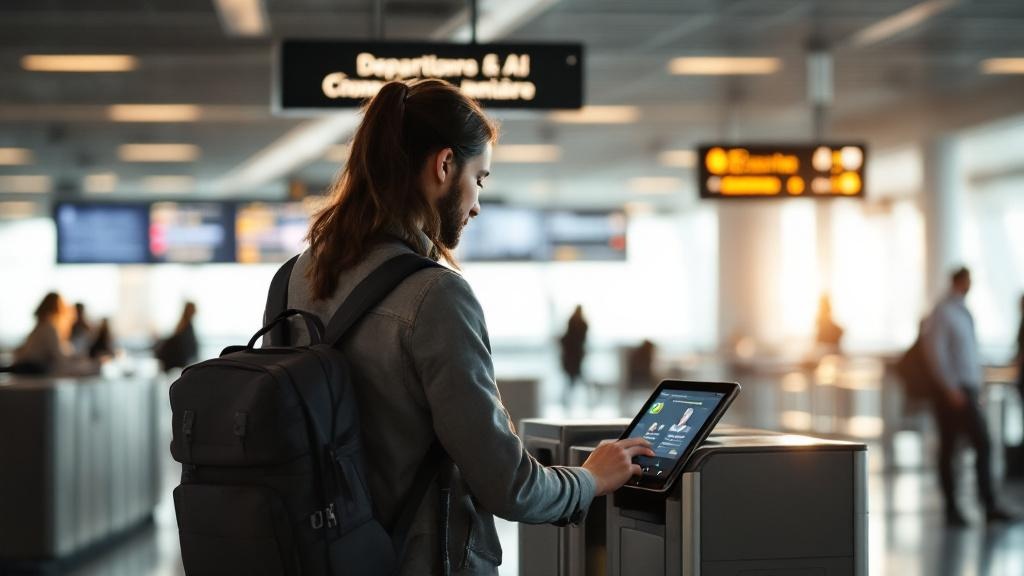
Start at the front door. The UK's UKVI digital visa system now uses AI-assisted document review for Electronic Travel Authorisation applicants, cutting average processing times considerably compared with manual workflows. The Netherlands' Schiphol airport runs AI-driven baggage routing and biometric identity checks that reduce gate-to-kerb time by a claimed 18%. France's entry points are piloting AI-assisted queue management ahead of a surge in cultural tourism linked to continued interest in Paris following 2024.
Advertisement
Once you land, transport meets AI dispatch. Bolt and Free Now, both operating across the EU, run regional routing models that have learned from dense urban environments to optimise rides in cities from Tallinn to Seville. Hotel groups including Accor and IHG have rolled out AI concierge systems in flagship European properties, handling multilingual restaurant bookings, spa scheduling, and itinerary recommendations across French, German, Spanish, Italian, and English.
Why Now, and Why Together
Three forces converged. First, the EU's push toward a common digital identity layer, through the European Digital Identity Wallet framework, has accelerated technical integrations that tourism operators are quietly piggy-backing on. Second, North American and Indian outbound tourism rebounded unevenly post-pandemic, pushing European destinations to compete on experience quality rather than cost alone. Third, hospitality labour markets have not recovered to pre-pandemic levels across most of the EU, forcing operators to automate front-of-house workflows that were previously human-intensive.
Dr. Philipp Rauschnabel, Professor of Digital Marketing and Media Innovation at the University of the German Armed Forces Munich and a leading voice on AI in customer experience, has argued publicly that the hospitality sector's adoption of AI is less a strategic choice and more a structural response to workforce economics. The numbers support that view: Eurostat data shows hospitality vacancies in the EU remained elevated well into 2025, with Germany and the Netherlands among the worst affected.
The European Leaderboard
Netherlands: Airport biometrics and AI baggage routing at Schiphol, faster transit and smoother transfers.
United Kingdom: ETA and visa automation through UKVI, shorter processing times for pre-arrival documentation.
France: AI queue management and multilingual chatbots at major cultural attractions, pre-arrival and on-site clarity.
Germany: Smart city mobility in Berlin and Munich, better public transit integration for visitors.
Spain: Hotel AI concierges in Barcelona and Seville, faster check-in and personalised itinerary support.
Portugal: Dynamic pricing on transport and short-let platforms, more flexible and transparent fare structures.
Andrea Renda, Senior Research Fellow at the Centre for European Policy Studies in Brussels and one of the EU's most cited AI policy analysts, has noted that European tourism is becoming an inadvertent test bed for the AI Act's practical implications. "The hospitality sector is deploying AI systems that interact directly with consumers at scale," he wrote in a 2025 policy brief. "That makes it one of the most consequential implementation environments for the regulation, and one of the least scrutinised."
What Travellers Should Know
Your visa or ETA application is likely being pre-screened by an AI classifier. Clean, consistent documentation speeds the process.
Airport biometrics are opt-in in most EU jurisdictions. Privacy-conscious travellers can still use traditional document lanes.
AI concierges at hotels handle requests in the local language plus English, Mandarin, and in most cases French and Spanish.
Dynamic pricing applies to ride-hailing and some short-break bookings. Off-peak windows can save 20 to 30 per cent.
Food delivery and local discovery apps surface smaller independent restaurants more effectively than legacy review platforms, and the recommendations are increasingly trustworthy.
Translation kiosks are now common in major European rail terminals, including Paris Gare du Nord and Berlin Hauptbahnhof.
Where It Still Breaks
The most common complaint is latency. AI chatbots trained on curated datasets struggle with off-menu requests. Regional cuisines and cultural nuances with limited online documentation remain gaps: rural Basque Country, parts of southern Italy, and much of the Western Balkans are poorly served. Accessibility features for travellers with disabilities lag behind best-in-class international standards. And cross-border data sharing for a truly seamless European tourism identity remains aspirational, held up by GDPR implementation differences across member states and the UK's post-Brexit data adequacy arrangements.
The EU AI Act, which entered phased application in 2024, adds a further layer of compliance consideration for operators deploying AI in consumer-facing contexts. Biometric systems and automated decision-making in visa processes fall under heightened obligations, and enforcement is still finding its footing.
Updates
published_at reshuffled 2026-04-29 to spread distribution per editorial directive
Byline migrated from "James Whitfield" (james-whitfield) to Intelligence Desk per editorial integrity policy.
AI Terms in This Article3 terms
AI-driven
Primarily guided or operated by artificial intelligence.
at scale
Applied broadly, to a large number of users or use cases.
best-in-class
Among the top performers in its category.
Advertisement
Comments
Sign in to join the conversation. Be civil, be specific, link your sources.




Comments
Sign in to join the conversation. Be civil, be specific, link your sources.