

OpenAI is building hardware. Not a software plugin, not an API wrapper, but a physical object you can hold in your hand, designed by the man who gave the world the iPhone and the iMac. The collaboration between Sam Altman and Jony Ive is no longer rumour; it is confirmed, timestamped, and subject to court filings. Europe, which is already grappling with how to govern AI systems it did not build, now faces the arrival of an AI device it did not design either.
What Has Been Confirmed
Speaking at Emerson Collective's 2025 Demo Day, Altman and Ive offered the clearest public account yet of their secretive project. When asked about timing, Ive described a window of "less than two years." OpenAI's Chief Global Affairs Officer, Chris Lehane, subsequently told Axios House Davos that the company is "on schedule to introduce its first device in the latter half of 2026," calling it one of the company's "significant upcoming highlights."
Court filings add further precision. Peter Welinder, OpenAI's VP and General Manager, stated on the record that the "first hardware device will not ship to customers before the end of February 2027." The gap between reveal and availability is deliberate; this is a company that has clearly studied what went wrong with rushed AI hardware launches elsewhere.
Internally, OpenAI's ambitions are even larger. Documents reviewed in legal proceedings indicate the company is targeting 100 million units in users' hands rapidly after launch. For context, that would put the device in the same conversation as the fastest-selling consumer electronics products in history.
Design First, Technology Second
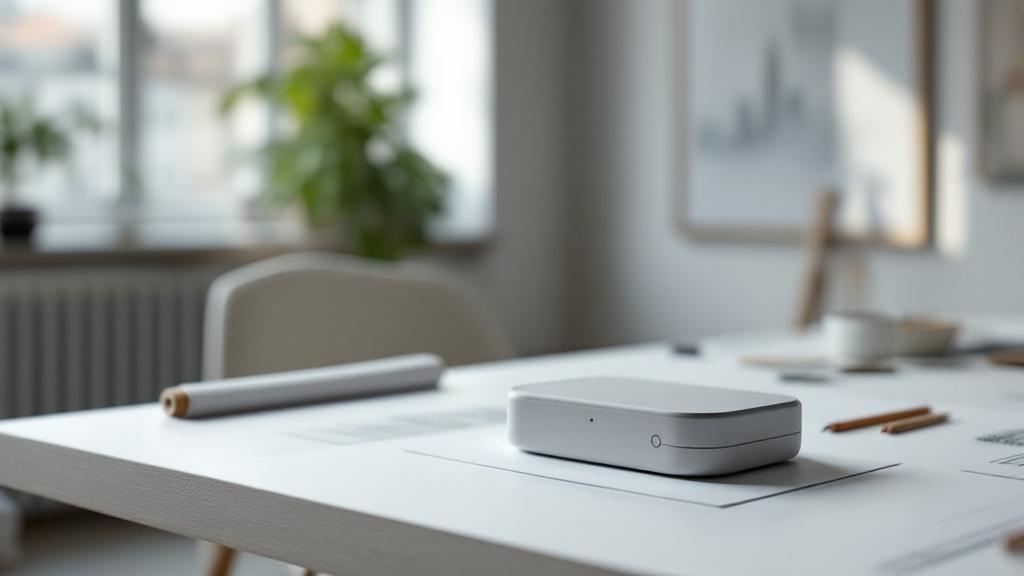
Altman described the current prototype as "simple and beautiful and playful." Earlier versions, he admitted, failed to inspire the crucial instinct to pick the thing up. Now, apparently, the team believes it has found the right form.
Ive's guiding philosophy is worth quoting in full, because it signals a deliberate break from the design language of most AI hardware to date:
"I love solutions that teeter on appearing almost naive in their simplicity, and I also love incredibly intelligent, sophisticated products that you want to touch, and you feel no intimidation, and you want to use almost carelessly, that you use them almost without thought, that they're just tools." The device is described as screen-free and roughly smartphone-sized, which points strongly towards voice, gesture, and haptic interaction as the primary input and output modes. Given OpenAI's lead in conversational AI, the screen-free approach makes strategic sense, but execution is everything. The Humane AI Pin demonstrated precisely how quickly the market punishes a device that promises effortless interaction and then fails to deliver it.
The European Dimension
For European consumers and policymakers, the arrival of a mass-market AI device from OpenAI raises questions that go well beyond product reviews. The EU AI Act, which entered into force in August 2024, imposes obligations on providers of general-purpose AI models, and a physical device bundling those models into everyday interaction will sit squarely within its scope.
Kris Shrishak, an AI policy adviser at the Irish Council for Civil Liberties and a recognised voice in Brussels AI governance discussions, has argued consistently that ambient and always-on AI interfaces require stronger transparency obligations than current drafting contemplates. A screen-free device that responds to context and environment is precisely the kind of ambient system he has flagged as a regulatory gap.
Meanwhile, Mistral AI, the Paris-based large language model company and Europe's most prominent AI lab, is itself exploring on-device inference and hardware partnerships. Should OpenAI's device succeed, pressure on Mistral and its investors to produce a European hardware answer will intensify considerably. Arthur Mensch, Mistral's chief executive, has spoken publicly about the importance of European AI infrastructure remaining competitive at the model layer; a dominant foreign AI device could undermine that ambition at the consumer layer before European alternatives are ready.
Interaction Possibilities and Technical Unknowns
Specific technical details remain under wraps, but the screen-free, smartphone-sized form factor points to a device built around several interaction modes:
- Advanced voice commands driven by GPT models for natural, low-latency conversation
- Gesture recognition for spatial control without a touchscreen
- Haptic feedback as the primary non-audio communication channel
- Integration with existing devices, positioning the hardware as a central AI hub rather than a standalone replacement
- Ambient computing that reads environmental context and responds without explicit prompting
Each of these capabilities carries data implications. A device that is always listening, always sensing, and always connected to OpenAI's cloud infrastructure will face significant scrutiny from national data protection authorities across the EU, as well as from the UK Information Commissioner's Office post-Brexit. The question of where data is processed, stored, and retained will need clear answers before the device ships to European markets.
Competition and Market Timing
The AI hardware space has produced more cautionary tales than success stories. The Humane AI Pin, despite considerable pre-launch excitement, struggled to find a sustainable market position. Rabbit's R1 device attracted early curiosity but failed to demonstrate a compelling use case that justified abandoning the smartphone.
OpenAI brings two advantages that neither of those ventures possessed: a proven AI model stack with hundreds of millions of active users, and a designer whose track record in creating genuinely desirable consumer objects is unmatched. Whether those advantages are sufficient to overcome the inherent difficulty of changing how people interact with technology daily remains the central question.
The target of 100 million units is not modest. It implies OpenAI is not building a niche product for early adopters; it is aiming for the mass market from launch. That ambition, combined with the February 2027 shipping floor, suggests the company understands that supply chain and manufacturing readiness are as important as the product itself. Great AI hardware that cannot be delivered at scale is simply expensive vaporware.
What to Watch Before the Reveal
Between now and the late 2026 reveal, European observers should track three things. First, how OpenAI structures its data processing agreements for European users of the device, given GDPR requirements and the forthcoming obligations under the AI Act. Second, whether any European hardware or semiconductor companies, including ASML, whose lithography machines underpin global chip production, or ARM's European licensees, feature in the supply chain. Third, whether Mistral or any other European AI lab moves to announce a competing device or partnership before OpenAI's reveal creates a de facto standard for AI hardware interaction.
The device may not land in European hands until well into 2027, but its design choices, regulatory posture, and market positioning are being set right now. That is the moment to engage, not after the launch event.

Comments
Sign in to join the conversation. Be civil, be specific, link your sources.