

Google has made a decisive break from the rhythm of annual Android releases, shifting to a continuous update model that pushes AI-powered features to devices as soon as they are ready. Android 16 is the clearest demonstration yet of this new philosophy, delivering smarter notifications, richer personalisation tools, and overhauled parental controls. For the hundreds of millions of Android users across the EU and UK, the change is material: phones will now grow meaningfully more capable throughout the year, rather than in a single autumn splash.
AI Tackles Notification Chaos
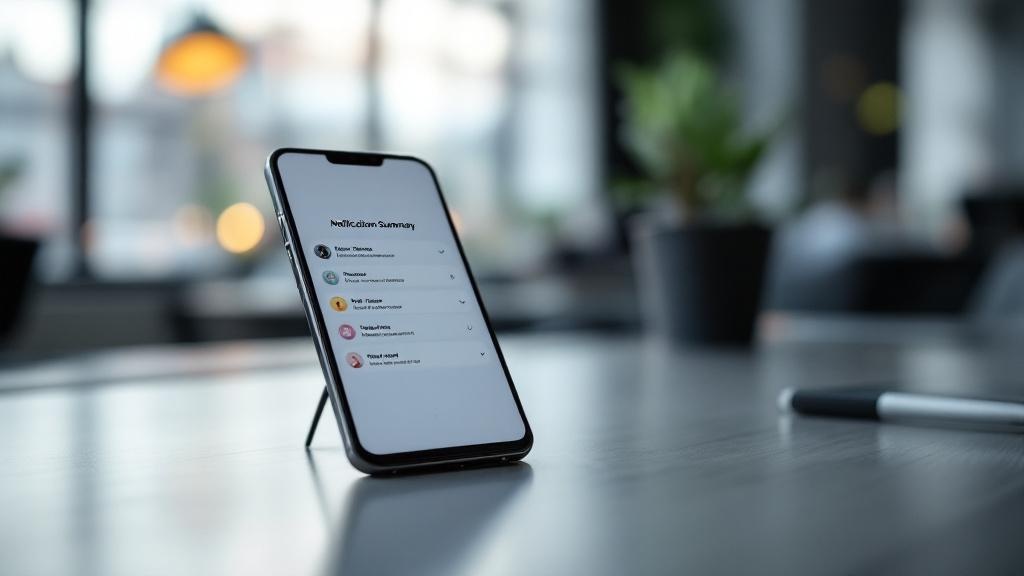
Notification overload has been one of the most persistent frustrations in smartphone design, and Android 16's AI-powered approach offers a credible answer. The system now generates intelligent notification summaries, distilling lengthy group chats or detailed email threads into concise, scannable digests. Alongside this, a notification organiser automatically groups and silences lower-priority alerts, including promotional emails, social media nudges, and news pings, whilst ensuring genuinely urgent messages still arrive immediately.
The underlying models are the same language systems powering Google's Search AI Overviews, which means the summarisation capability is already battle-tested at scale. For European users juggling multilingual notifications across work and personal accounts, the selective filtering could prove especially valuable.
Google processes notification summaries on-device using local AI models, meaning personal message content is not transmitted to remote servers. That on-device processing architecture is likely to matter significantly in the EU context: the General Data Protection Regulation places strict limits on processing sensitive personal communications, and on-device inference sidesteps many of the consent and data-transfer headaches that have historically complicated cloud-based AI features for European deployments.
Personalisation: More Than a Cosmetic Upgrade
Android 16 introduces a suite of customisation features that adapt to individual user preferences rather than imposing a single design language:
- Custom icon shapes let users move beyond standard circular or square formats, giving home screens a more tailored appearance.
- Themed icons automatically adapt across all installed applications, creating visual harmony regardless of how individual developers have styled their apps.
- Expanded dark theme functionality darkens light-themed third-party apps automatically, even when those apps lack native dark mode support, producing a more consistent visual experience.
- Enhanced widget placement options provide more granular control over home screen layouts, reducing the clutter that accumulates on long-used devices.
These are not superficial tweaks. The expanded dark theme in particular addresses a long-standing inconsistency that has frustrated Android power users for years. Machine learning algorithms analysing behaviour patterns drive many of these adaptations, meaning the system learns which settings a user actually prefers rather than requiring manual configuration at every step.
Parental Controls: A Built-In Safeguard
Parents across the EU and UK have long had to rely on third-party applications or patchwork system settings to manage children's screen time. Android 16 consolidates these scattered controls into a dedicated, PIN-protected section within Android Settings.
Key capabilities include daily screen time limits, automated bedtime lockdowns that activate on a set schedule, and per-app restrictions that allow parents to block specific applications entirely or apply time budgets. The system retains flexibility: parents can grant additional minutes when circumstances warrant, rather than facing an all-or-nothing lock-out.
| Feature | Previous Android | Android 16 |
|---|---|---|
| Screen Time Management | Third-party apps required | Built-in controls with PIN protection |
| App Restrictions | Limited system options | Per-app time limits and blocking |
| Bedtime Controls | Manual activation needed | Automated scheduling available |
| Flexibility Options | All-or-nothing approach | Extra time grants and exceptions |
The controls integrate with Google Family Link for households that require more comprehensive oversight, including location tracking and purchase approval workflows. European digital-safety advocates have repeatedly called on platform providers to move parental protection tools into the operating system layer rather than leaving families dependent on inconsistent app-store solutions. Android 16's approach directly answers that call.
The timing is significant. The EU's Digital Services Act now obliges large platform operators to offer robust tools protecting minors from harmful content and excessive screen exposure. Andrea Jelinek, former chair of the European Data Protection Board and a consistent voice on responsible platform design, has argued that systemic protections baked into operating systems are inherently more reliable than bolt-on controls. Android 16's architecture aligns squarely with that position.
Integration with Google's Broader AI Ecosystem
Android 16's features do not exist in isolation. They connect directly to Google's expanding AI portfolio, including Gemini integration and enhanced Google Photos editing capabilities. The notification summarisation pipeline draws on the same language models underpinning Search AI Overviews; the personalisation engine feeds into behavioural models that also inform Google Assistant and Discover feed curation.
Analyst firm Gartner projects that up to 40 per cent of enterprise applications will include task-specific AI agents by 2026, up from under 5 per cent today. That trajectory makes the agentic dimension of Android 16 particularly worth watching: the notification organiser and automated dark-theme engine are early, relatively low-stakes examples of AI acting on a user's behalf without explicit instruction at each step. As these agents become more capable, the regulatory and trust questions will intensify.
Dragoș Tudorache, the European Parliament rapporteur who steered the EU AI Act through its final legislative stages, has consistently emphasised that transparency and human oversight must accompany any AI system that takes autonomous actions on behalf of users. Android 16's on-device processing and PIN-protected parental controls are steps in the right direction, but European regulators will expect Google to document clearly which decisions the AI is making autonomously and on what basis.

Comments
Sign in to join the conversation. Be civil, be specific, link your sources.