Comet Browser Lands on Android: Perplexity Takes Its AI-Native Vision Mobile
Perplexity's Comet browser has arrived on Android, promising 40% faster loading speeds and native voice-powered web interactions built from the ground up. As OpenAI and Google intensify the browser wars, European users now have a genuinely AI-native mobile option to evaluate, though missing sync features and serious security questions remain unresolved.
Perplexity's Comet browser is now available on Android, and it represents something genuinely different from the wave of Chrome clones with AI features grafted on top. Built from the ground up with artificial intelligence as its core function rather than an afterthought, Comet's mobile debut marks a meaningful escalation in the browser wars, and European users would do well to pay close attention.
After debuting on desktop for Perplexity Max subscribers in July 2024, then opening to all desktop users, Comet has now extended its AI-native browsing experience to Android. The timing is deliberate. Mobile accounts for the majority of web traffic across Europe, and any browser serious about challenging Chrome's dominance has to be credible on smartphones first.
Advertisement
Performance That Actually Matters
Early benchmarks suggest Comet is not simply trading on AI novelty. The browser delivers tangible performance improvements that mobile users will notice immediately. Independent testing indicates Comet uses 35% less battery than Chrome, achieved through optimised JavaScript processing and intelligent background tab management. On a continent where commuters routinely rely on mobile data across patchy rail networks from Glasgow to Warsaw, that efficiency gain is genuinely useful.
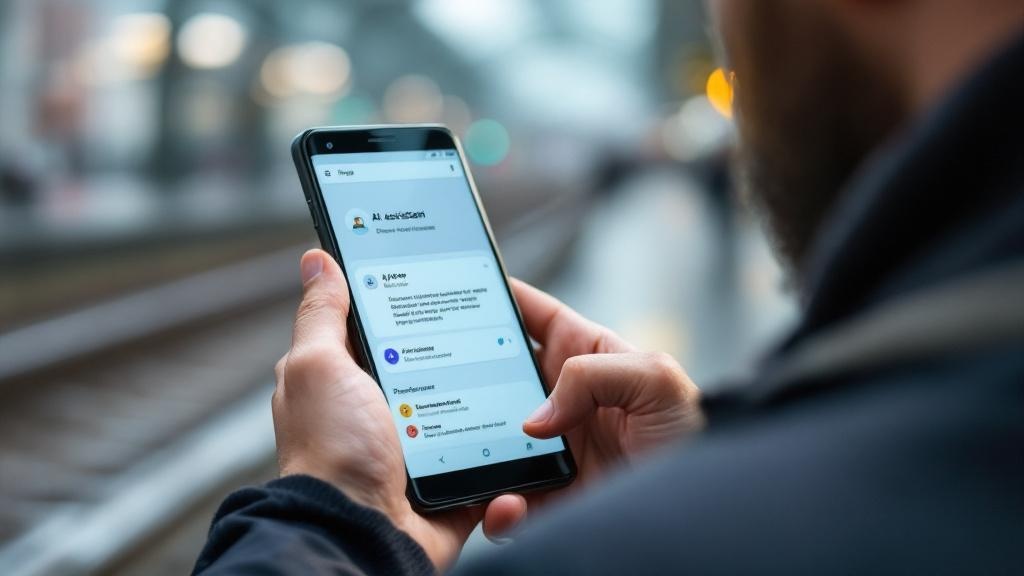
The voice interaction feature is the headline differentiator on mobile. Users can ask Comet to summarise the current tab, explain complex content, or surface related information without switching applications. It is the kind of seamless integration that makes AI feel productive rather than performative. When walking between meetings or commuting on the Eurostar, verbal interaction with web content opens real possibilities for information consumption that a touchscreen keyboard simply cannot match.
How Comet Compares
What separates Comet from browsers such as Chrome with AI extensions is its foundational architecture. Comet integrates AI at the browser engine level, enabling contextual understanding across all open tabs and native voice interaction. Extensions, by contrast, operate as separate layers with limited browser access and impose additional processing overhead.
Dr. Karsten Nohl, the Berlin-based security researcher and founder of Security Research Labs, has previously raised pointed questions about how AI browsers handle user data at the engine level, noting that native integration creates a far broader attack surface than bolt-on extensions. Those concerns apply directly to Comet's approach, and Perplexity's assurance that browsing data remains private by default deserves independent scrutiny, particularly given the EU's General Data Protection Regulation requirements around data minimisation and purpose limitation.
The practical applications become clearer when you consider mobile use cases in detail. Research tasks that typically require switching between several applications can now happen within a single browser session. Students working through academic papers at ETH Zurich or the Sorbonne can ask questions about content without leaving the page. Professionals can extract summaries from lengthy regulatory documents while travelling. Specific scenarios where Comet's AI integration proves its value include:
Research sessions across multiple tabs with instant cross-referencing and summarisation
Language learning, where users can request translations or plain-language explanations of complex texts
News consumption with AI-powered context provision and source linking
Shopping research with automated feature comparisons across multiple product pages
Technical documentation navigation with plain-English explanations of dense specifications
What Is Still Missing
The Android launch is not feature-complete, and Perplexity deserves credit for saying so openly. Cross-device sync is absent, meaning browsing history and bookmarks do not carry over from desktop to mobile. For users already embedded in the Comet desktop ecosystem, this is not a minor inconvenience; it is a real barrier to adoption as a primary browser.
Company spokesperson Beejoli Shah has indicated that cross-device sync should arrive within weeks. Perplexity is also developing what it describes as an "agentic" voice mode, promising more sophisticated conversational interactions than the current implementation. A built-in password manager is on the roadmap as well, though Android users can continue with existing password management tools in the interim.
Violetta Bonenkamp, browser technology analyst and author of the widely read Make Money with Code newsletter, has articulated the core challenge facing Comet and its rivals clearly: "Starting with Chromium essentially makes them clones of Chrome, with AI bolted on top. People don't see a clear reason to switch unless the experience truly transforms their workflow." Perplexity has clearly absorbed that critique. Whether its foundational approach is sufficient to change behaviour at scale is the defining question.
The Wider Browser Battle
Comet's Android debut arrives as the browser market faces its most significant structural challenge in over a decade. OpenAI is building its own AI-powered browser aimed squarely at Chrome, while Google is integrating Gemini more deeply into Chrome itself. The European Commission's Digital Markets Act enforcement against Google's browser bundling practices adds a further dimension: regulatory pressure may, for once, actually create room for credible alternatives to gain a foothold in Europe.
Natasha Lomas, Europe editor at TechCrunch and one of the sharpest analysts of EU tech regulation, has consistently argued that the DMA's interoperability provisions could meaningfully loosen Chrome's grip on the European market if enforced robustly. An AI-native browser arriving at precisely this regulatory moment is either fortunate timing or careful strategy on Perplexity's part; most likely both.
The security dimension remains the most serious unresolved question. Researchers have exposed deep security vulnerabilities in AI browser architectures over recent months, raising legitimate concerns about privacy and data handling. For European enterprise and public sector users operating under GDPR and the forthcoming EU AI Act, those vulnerabilities are not abstract; they are compliance risks. Perplexity will need to engage substantively with European data protection authorities, not simply post a privacy policy, if it wants serious institutional adoption on this side of the Atlantic.
Comet's performance credentials are real, its architectural ambition is genuine, and the mobile timing is sound. The missing sync, the unresolved security questions, and the compliance obligations of operating in the EU mean the browser's European story is still being written. Early signs are encouraging, but cautious adoption rather than wholesale migration is the sensible position for now.
Updates
published_at reshuffled 2026-04-29 to spread distribution per editorial directive
Byline migrated from "Sofia Romano" (sofia-romano) to Intelligence Desk per editorial integrity policy.
AI Terms in This Article5 terms
agentic
AI that can independently take actions and make decisions to complete tasks.
AI-powered
Uses artificial intelligence as part of its functionality.
at scale
Applied broadly, to a large number of users or use cases.
ecosystem
A network of interconnected products, services, and stakeholders.
seamless integration
Easy to connect with existing systems.
Advertisement
Comments
Sign in to join the conversation. Be civil, be specific, link your sources.




Comments
Sign in to join the conversation. Be civil, be specific, link your sources.