Beyond Basic AI: What Skills Actually Do
A Skill packages your company's brand guidelines, data analysis methods, or product requirements document formats into reusable instruction sets. Instead of repeatedly explaining processes each session, you create a Skill once and Claude applies it automatically when the context calls for it.
Skills are folders containing instructions, scripts, templates, and domain-specific knowledge. Their practical impact is considerable: Claude shifts from generalist to specialist, understanding your workflows, brand identity, and organisational processes. For product managers, this means generating presentations that follow brand guidelines, creating data visualisations from raw data, or flagging project timeline inconsistencies within minutes rather than hours.
The key mechanism is progressive disclosure. Claude loads relevant Skills automatically and recognises from context when to apply them, without requiring explicit prompting from the user. This transforms routine interactions into genuinely productive collaborations, removing the friction that makes most enterprise AI deployments fall short of their early promise.
The initial rollout introduced Agent Skills across claude.ai, followed by organisation-wide management for business plans and the publication of an open standard at agentskills.io. That commitment to an open standard is strategically significant: investments in Skills are not platform-specific, making them durable assets rather than vendor lock-in liabilities, a distinction that matters considerably to European procurement teams operating under competitive tendering obligations.
Solving Product Management's Repetitive Work Problem
Product managers spend a disproportionate share of their working week on routine tasks: drafting documents, synthesising research, preparing stakeholder communications. Skills directly address these pain points by eliminating the repetitive explanation problem that plagues every new AI session.
Creating a PRD Template Skill means Claude automatically loads your company's format, required sections, and preferred tone whenever you need product requirements document assistance. This saves time whilst ensuring consistency across outputs, two goals that normally pull in opposite directions when humans are under deadline pressure. The capability also scales institutional knowledge effectively: best practices, workflows, and tribal knowledge can be codified into Skills, allowing new product managers to access collective intelligence from day one.
The time savings are material. Typical workflow comparisons cited by early adopters include:
- Manual competitive analysis updates reduced from four to five hours down to approximately 30 minutes through automated tracking with structured output
- Interview transcript synthesis cut from three to four hours to around 45 minutes as the AI identifies themes and structures findings
- Technical specification drafting compressed from two to three hours to roughly one hour using pre-loaded architecture and naming conventions
- Multi-audience stakeholder updates shortened from two hours to 20 minutes via a single input producing multiple tailored outputs
This aligns with observations from researchers at ETH Zurich's AI Centre, where studies on human-AI collaboration consistently show that context persistence, not raw model capability, is the primary bottleneck in professional AI adoption. When systems remember your processes, productivity compounds rather than plateaus.
Real-World Applications in Action
Product managers are leveraging Skills across a range of scenarios that previously demanded significant manual effort:
- Automated competitive analysis - Skills track specific competitors, evaluate features, and format findings according to predefined templates, delivering structured output without repeated configuration
- User interview synthesis - Skills identify themes, categorise feedback, and structure comprehensive findings from uploaded transcripts, replacing hours of manual annotation
- Technical specification generation - Skills pre-loaded with system architecture overviews and naming conventions produce immediately usable specs for engineering teams, reducing communication overhead substantially
- Stakeholder communications - Dedicated Skills for executive updates, engineering briefs, and sales enablement adapt the same core content for different audiences automatically
Skills also integrate with existing tools through the Model Context Protocol. Notion Skills format documentation according to workspace structures, whilst Figma Skills generate design specifications following team conventions. Jira integration is similarly available. This embeds AI assistance within operational ecosystems rather than requiring teams to context-switch to a separate interface, a point that European enterprise buyers, accustomed to integrated toolchains, will find persuasive.
Implementation: How to Build Effective Skills
Creating effective Skills begins with identifying stable, repetitive tasks that follow consistent patterns. The process is straightforward but rewards careful documentation:
- Document your repetitive process in detail, including goals and step-by-step instructions covering edge cases and preferred outputs
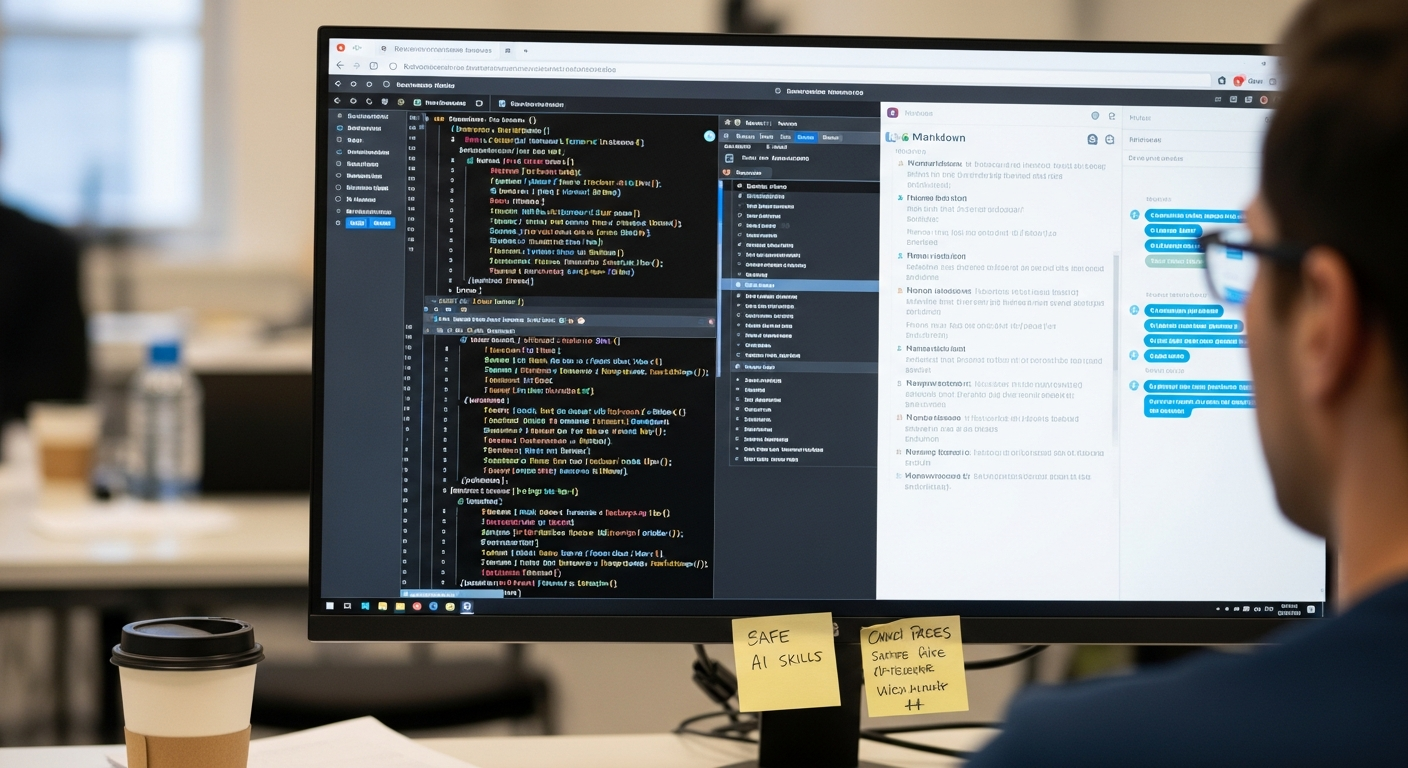
- Create Markdown files within Claude's folder structure, keeping instructions modular and clearly labelled
- Include examples and templates to guide Claude's output quality and format
- Test and refine based on initial results, treating the first version as a draft rather than a finished product
- Enable code execution capability for full functionality, whilst evaluating the security implications this entails for your organisation
Consider Skills as living documents that evolve with your processes. Regular refinement based on usage patterns and team feedback ensures continued effectiveness. Most product managers report that initial creation takes two to four hours per Skill, including documentation and testing, with monthly time savings of ten to fifteen hours per well-designed Skill thereafter.
European Compliance and Security Considerations
Skills are not without drawbacks, and European enterprise teams must weigh these carefully. Code execution capability is required for full functionality, which raises data handling questions under the General Data Protection Regulation and, for organisations subject to it, the EU AI Act's provisions on high-risk AI systems. Anthropic has not yet published a formal EU AI Act conformity assessment for Skills, and procurement teams should request clarity on this before broad rollout.
Verity Harding, AI policy researcher and author of "AI Needs You", has argued publicly that embedding AI deeply into professional workflows requires organisations to maintain clear human oversight mechanisms. That principle maps directly onto Skills implementation: the output quality correlates directly with the instruction quality encoded by humans, reinforcing the importance of rigorous documentation and regular human review rather than passive reliance on automated outputs.
Mistral AI, the Paris-based large language model company and one of Europe's most prominent AI developers, has signalled interest in interoperable agent standards that mirror the agentskills.io open standard approach. If the standard gains traction across European providers, Skills built today on Claude could become transferable to alternative platforms, a prospect that strengthens the strategic case for early investment considerably.
Common Questions From European Teams
How do Skills differ from regular prompts? Skills are persistent, structured capabilities that Claude applies automatically when relevant, whilst prompts require manual input each session. Skills contain comprehensive instructions, templates, and examples that create consistent, specialised behaviour across the team, not just for the individual who wrote the original prompt.
Can Skills work with existing tools? Yes. Skills integrate with Notion, Figma, and Jira through Model Context Protocol connectors and adapt to existing workflows rather than requiring new processes.
Are Skills locked to Claude? Skills follow an open standard published at agentskills.io, making them potentially transferable to other AI platforms that adopt the standard. Investment is not platform-specific, which matters for organisations with multi-vendor AI strategies.
What product management tasks work best? Documentation formatting, research synthesis, competitive analysis, technical specifications, and stakeholder communications benefit most. Tasks with clear patterns and consistent outputs are the strongest candidates.
Claude Skills represents a meaningful and concrete step forward in AI utility for product teams. European organisations that invest in building a coherent library of Skills now will accumulate a compounding institutional advantage over those waiting for the technology to mature further. The standard is already open; the window for early adoption is still open too.





Comments
Sign in to join the conversation. Be civil, be specific, link your sources.