Big Tech's AI Is Failing Europe's Smallholder Farmers Too
Models built by Google, Meta, and Microsoft were designed for large-scale North American and Western European farms. They misidentify crops, miss trees, and ignore the realities of smallholder agriculture across the EU's most rural regions and developing markets. The problem is not a technical one; it is a structural incentive failure that European policymakers must confront head-on.
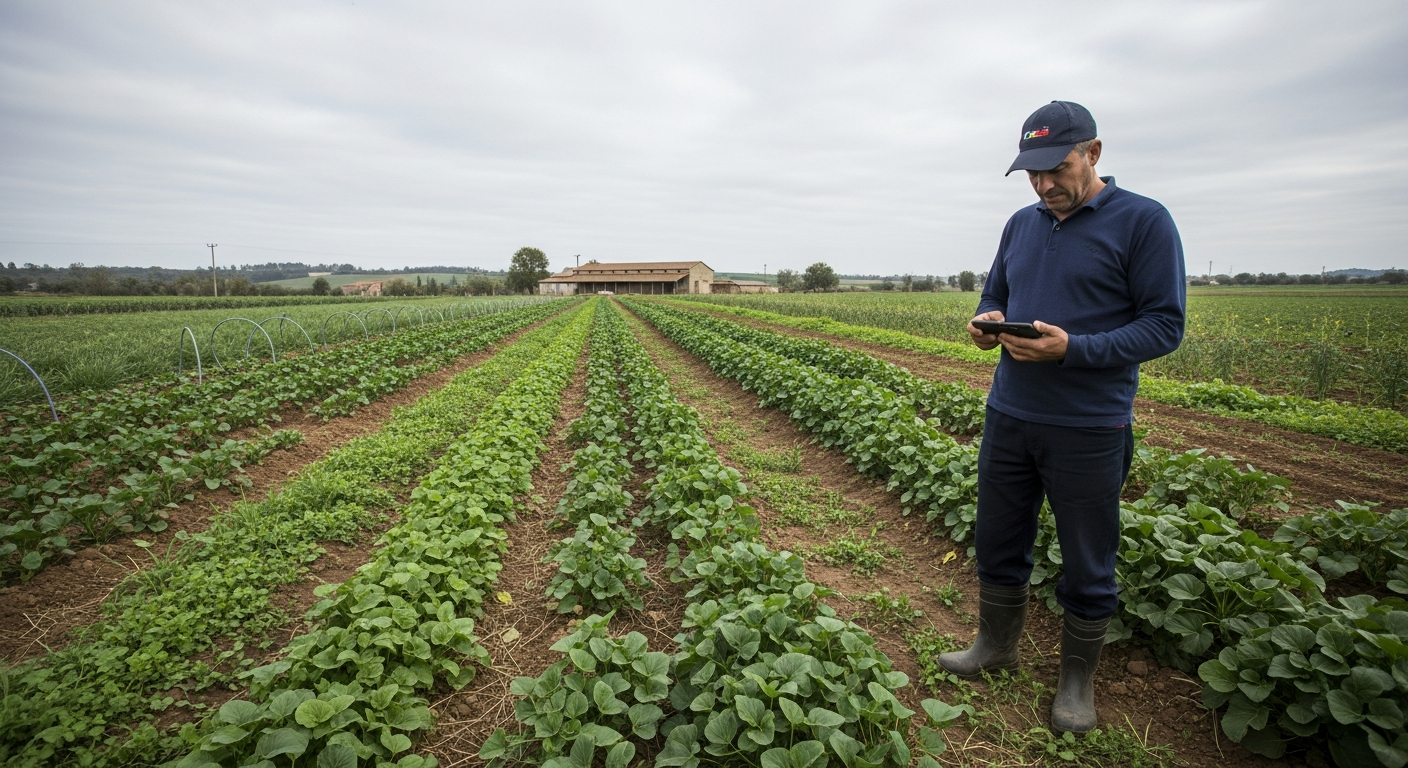
The agricultural AI tools that Google, Meta, and Microsoft have brought to market share a fundamental flaw: they were trained overwhelmingly on data from large-scale, data-rich farms, and they routinely fail when deployed in contexts that look nothing like an Iowa cornfield. That is a problem not just for farmers in India or Kenya, but increasingly for smallholder farmers across southern and eastern Europe, where fragmented land holdings, mixed cropping, and limited connectivity make Western-optimised AI models nearly useless.
[[KEY-TAKEAWAYS:Big Tech AI models trained on North American data routinely misidentify crops on smallholder farms|The global digital farming market is worth roughly 30 billion euros in 2025, forecast to reach 84 billion by 2034|EU rural regions share structural barriers with Global South farms: fragmented holdings, poor connectivity, low digital literacy|Purpose-built local models consistently outperform adapted Western ones for smallholder contexts|European regulators have leverage through the AI Act to mandate agricultural data diversity]]
Advertisement
Agriculture provides livelihoods for over two billion people in low and middle-income countries, but the technology powering the digital farming market, worth approximately 30 billion euros in 2025 and forecast to reach 84 billion by 2034, remains designed for industrial-scale operations. The EU's own rural regions, from Extremadura to Calabria to the Danube delta, are not as far removed from this problem as Brussels policymakers might assume.
When the Model Cannot See the Crop
The case that crystallises the failure most sharply comes from Maharashtra, India, where the non-profit Farmers for Forests attempted to use Meta's open-source Detectron2 model to map tree cover on agricultural land. The model missed more than half the trees. The reason was simple: it had been trained exclusively on North American forests. The team had to manually annotate 55,000 trees across 80 land parcels to build a dataset that reflected local conditions.
This is not an isolated anecdote. In western Kenya, researchers found that satellite imagery models trained on Western crop patterns could not reliably identify local staple crops. Their solution was to collect over five million crop images using GoPro cameras mounted on volunteer helmets, building ground-truth data entirely from scratch. The manual effort required to make these models functional underscores the vast gap between what Silicon Valley ships and what farmers in non-standard contexts actually need.
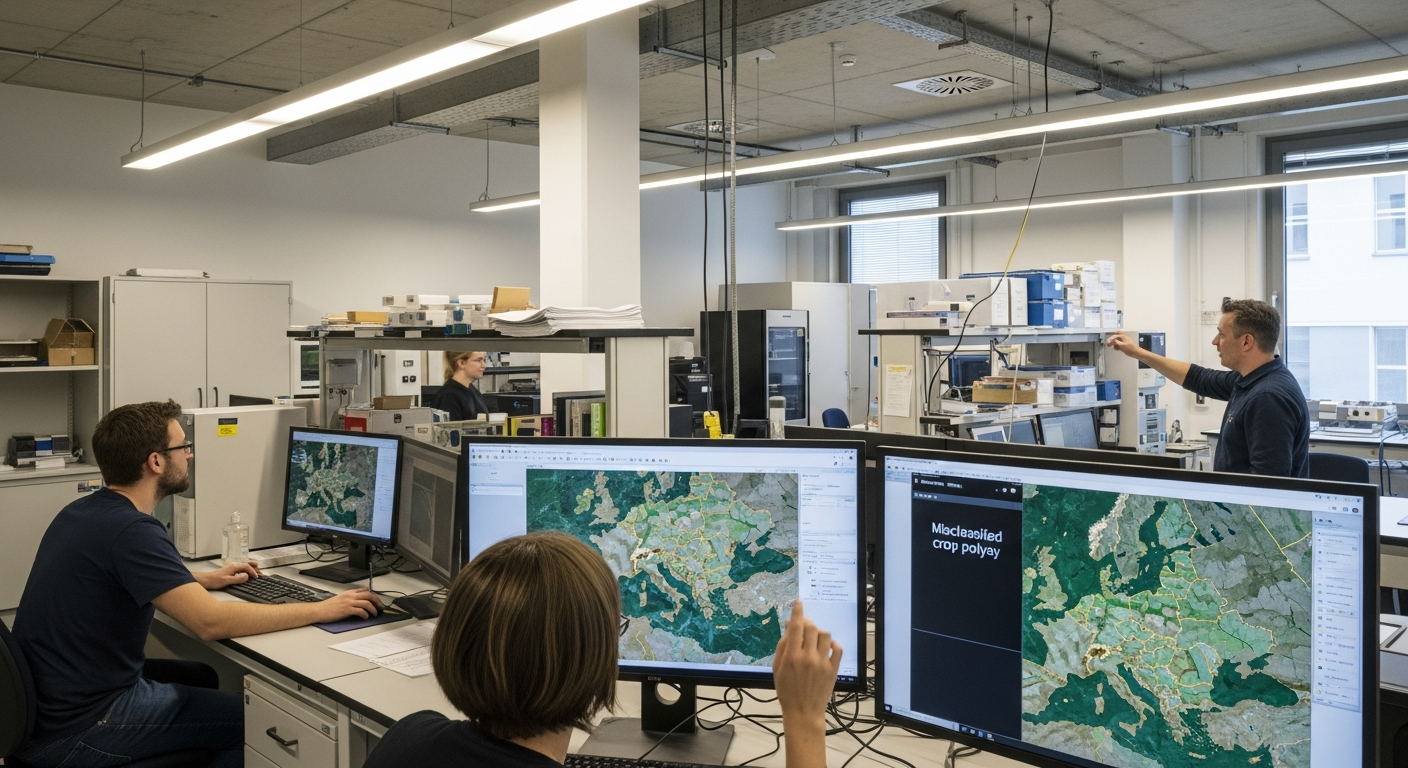
The same logic applies, with important nuance, to parts of the EU. Researchers at Wageningen University and Research, one of Europe's foremost agri-technology institutions, have documented repeatedly that models trained on monoculture, large-plot data perform poorly when applied to the mixed, small-plot farming systems that dominate much of southern and eastern Europe. The structural differences are not trivial: field sizes, crop rotation patterns, soil classifications, and even the angle of satellite capture all vary enough to render generic models unreliable.
The Infrastructure Reality
Even when an AI model is technically accurate, it often fails practically. Most agricultural AI tools assume reliable broadband connectivity, smartphone literacy, and a single decision-maker with purchasing authority. Those assumptions collapse in rural Romania, in highland Portugal, or across much of sub-Saharan Africa and South Asia simultaneously.
Digital Green, an organisation that has reached over one million farmers across South Asia and Africa through its FarmerChat platform, has built its system in 16 languages specifically to address this gap. The platform has answered over eight million farmer queries to date. Its co-founder and CEO, Rikin Gandhi, has been blunt about the design failure embedded in most commercial tools: if AI assumes literacy, connectivity, or decision authority, it only benefits better-resourced farmers first. That observation is as pertinent to a smallholder in Puglia as to one in Punjab.
In Brazil, a deliberately low-tech approach has proven effective: WhatsApp voice alerts for coastal farmers and fishers who need timely weather and tide information. No app download, no literacy barrier, no expensive hardware. The lesson is instructive for European rural development officers: effective agricultural AI in resource-constrained environments often looks nothing like the polished platforms promoted at tech conferences.
Who Is Actually Building for Local Conditions
The organisations making genuine progress share a common methodology: they build from local data upward rather than attempting to adapt Western models downward. Several initiatives illustrate what this looks like in practice:
Digital Green's FarmerChat trains on vernacular agricultural knowledge across 16 languages, reaching farmers who have no access to English-language resources.
NASA Harvest is constructing open crop-identification datasets for East Africa and South Asia using ground-level photography rather than satellite-only data, prioritising accuracy over convenience.
India's government convened researchers and policymakers earlier this year specifically to discuss deploying AI models trained on Indian soil types, climate zones, and crop varieties, with a focus on low-connectivity mobile deployment.
South Korea has committed to launching an agricultural satellite and a dedicated agricultural data centre for AI-driven supply and demand forecasting.
Europe has its own equivalents in development, but progress has been uneven. The European Commission's Horizon Europe programme has funded several agri-AI research consortia, yet commercial deployment at scale remains limited. The AI Act, which came into force in stages from 2024, gives European regulators a lever that no other jurisdiction currently holds: the ability to impose transparency and data-diversity requirements on AI systems deployed in high-stakes sectors. Agricultural decision support arguably qualifies.
The Incentive Misalignment at the Heart of the Problem
The structural issue is not a technical one. The models work adequately when they have appropriate training data. They lack that data for smallholder contexts because the companies with resources to build frontier models have no commercial reason to collect it.
Building a precision agriculture tool for large arable farms in East Anglia or the Paris Basin is commercially rewarding: those farmers can pay premium prices and the data environment is rich. Building one for polyculture smallholders in the Alentejo, let alone in Odisha, is not, at least not within the quarterly earnings frameworks that drive investment decisions in San Francisco or Seattle.
Approximately 28% of the global population, roughly 2.3 billion people, face moderate to severe food insecurity. AI has genuine potential to reduce that figure, but only if models are trained on data that reflects the places where food insecurity actually exists. At present, the data collection burden falls on under-resourced NGOs and public research institutions, while the commercial upside flows to the companies that did not do that work.
Andrea Glorioso, a digital economy counsellor at the EU Delegation in Washington and a longstanding voice on EU digital trade policy, has argued that data governance frameworks must account for asymmetric data power between large platforms and the communities whose behaviour generates that data. That principle applies with particular force in agriculture, where farmers in fragmented, low-income regions generate far less commercially attractive data than their counterparts on industrial holdings, yet face comparable or greater risks from poor AI recommendations.
Closer to the technical coalface, researchers at ETH Zurich's Crop Science group have been among the European voices pushing for open, geographically diverse training datasets as a prerequisite for trustworthy agricultural AI. Without mandated data diversity, the market will continue to optimise for the farmers who need the least help.
What European Policymakers Should Do Now
The EU is not a passive bystander in this market. It is a major funder of agricultural research, a regulator with genuine teeth under the AI Act, and a significant consumer of agricultural technology across 27 member states. Concrete steps that would make a material difference include:
Require agricultural AI systems deployed under EU rural development funding to publish training data provenance, including geographic and crop-type coverage statistics.
Extend Horizon Europe agri-AI funding specifically to consortia that include smallholder farming contexts from EU outermost regions and accession candidates.
Use the AI Act's high-risk classification mechanism to designate crop disease and yield prediction tools as high-risk where they inform subsidy or credit decisions, triggering mandatory accuracy documentation.
Commission a pan-European open dataset of smallholder crop imagery, modelled on NASA Harvest's ground-truth approach, administered through the Joint Research Centre.
Require Common Agricultural Policy digital tools to meet minimum multilingual and low-bandwidth standards before procurement approval.
None of these steps require waiting for Silicon Valley's business model to evolve. They require political will and a recognition that agricultural AI is critical infrastructure, not a consumer product.
The global AI in agriculture market was valued at approximately 2.6 billion euros in 2025 and is expected to reach 13 billion by 2034. The question is not whether that growth will happen. It is whether it will reach the two billion people who need it most, or whether it will remain concentrated in the wealthy, data-rich farming economies where these models already function adequately. Europe has both the regulatory authority and the research capacity to push the answer in the right direction. The argument for doing so is not charity; it is that a food system built on brittle, geographically narrow AI is a food security risk for everyone.
Updates
published_at reshuffled 2026-04-29 to spread distribution per editorial directive
AI Terms in This Article3 terms
AI-driven
Primarily guided or operated by artificial intelligence.
at scale
Applied broadly, to a large number of users or use cases.
leverage
Use effectively.
Advertisement
Comments
Sign in to join the conversation. Be civil, be specific, link your sources.




Comments
Sign in to join the conversation. Be civil, be specific, link your sources.